An article about USB-C was published on HN, and I simply have to respond to it. Besides a few inaccuracies, a wave of nonsense and myths erupted on social media. The article on HN is behind a paywall, so I will try to respond to specific parts of the text without the need to copy it.
I wrote a critical and technically expert article about USB-C here. I discuss USB-C from the perspective of a product designer and what to watch out for. Conversely, this article “USB-C, myths and nonsense” is written more for the general public.
The article on HN is interesting in its own way – it describes the physical essence of the matter very well and also mentions the problem with old adapters – for example, the easy interchangeability of adapters with the same connector but different voltage. Or a plethora of incompatible connector variants and the endless search for “the right charger”.
At the same time, it disparages the USB-C standard, which addresses these problems (or at least that’s how I perceive it).
But let’s take it step by step.

USB – data, not power
The author of the article mentions that USB was designed for data and not for power – the limit of 5V/500mA was a “standard” for a very long time. What needs to be said is that we are in the “prehistoric era of wearable electronics” (Nokia 3310 and similar) – batteries had hundreds of mAh, and 2.5W was quite sufficient.
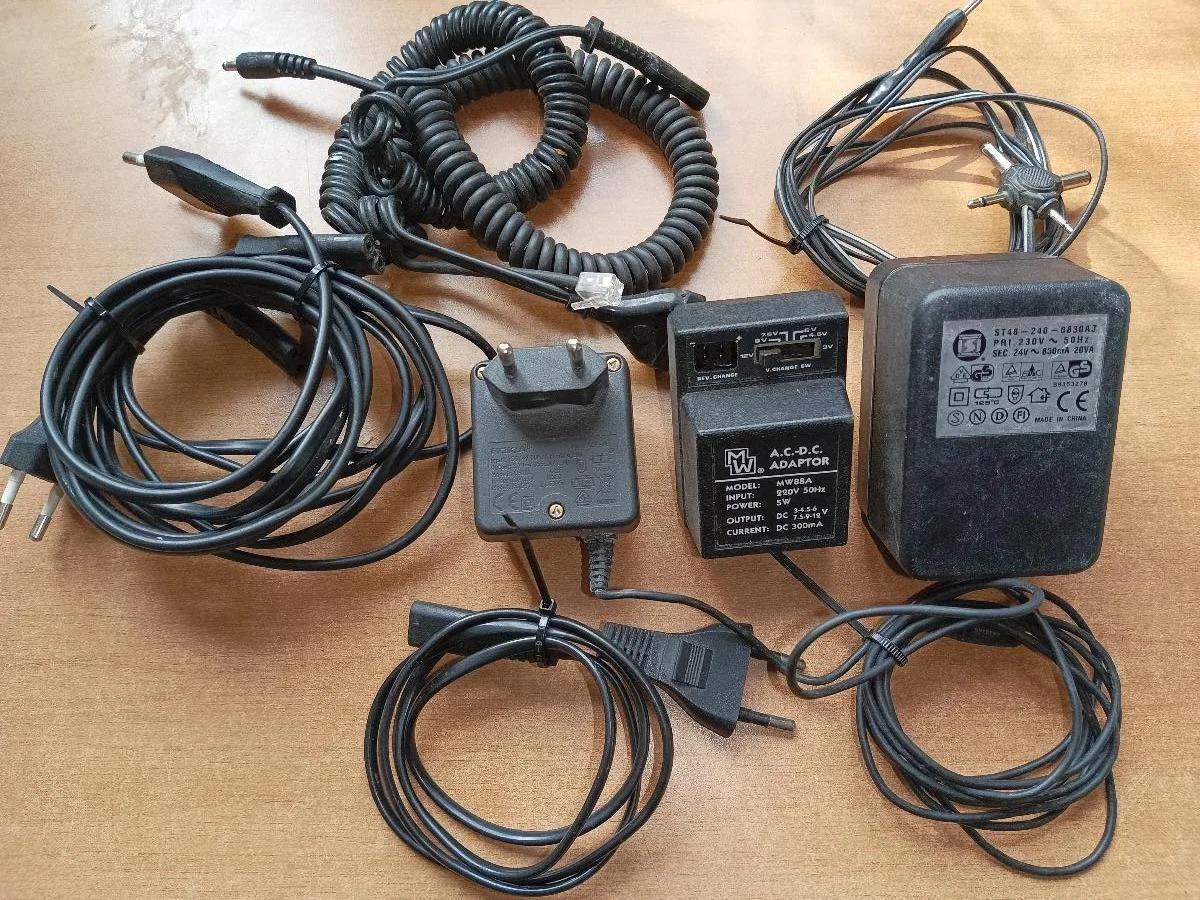
Proof of this is charging adapters with barrel connectors (DC jack) for phones (like Nokia), which had 5V/350mA, some 500mA – I might still find some at home. So, the first version of the USB standard anticipated that it could charge phones (generally small electronics).
Moreover, as the author himself mentions, some device manufacturers supplied cables to chargers in a two-wire configuration only – just for power, omitting the data wires. Thus, the USB cable was charging (limit 5V/500mA, some adapters allowed even 1000mA), but not for data transfer.
Power Delivery (and also Quick Charge)
The author rightly mentions that USB connectors have also spread to other areas of small electronic devices.
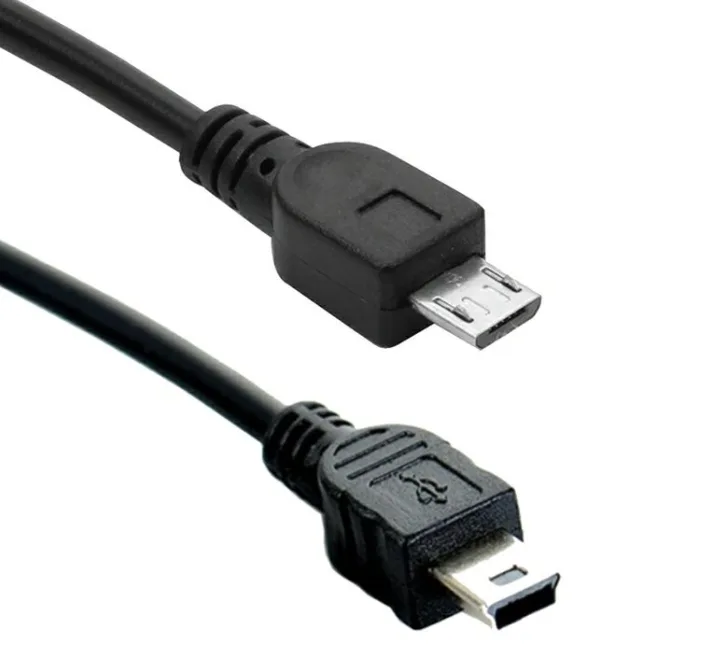
One of the influences was, of course, consumer pressure – instead of ten different (not only) barrel connectors, there were two – typically miniUSB and later microUSB. The other significant influence was the simple solution for charging (aha! it is anticipated that devices will be charged) and data transfer through one connector.
However, with newer electronics, the connectors that were used until then became outdated – we wanted to transfer more data faster while also achieving higher charging power. We solved more data with higher transfer speeds and higher power by “allowing” higher current (5V/3A).
But even that wasn’t enough, and thus fast charging standards emerged – the most common are Quick Charge and Power Delivery.
There are quite a few (protocols), but they all have something in common, they can operate in a basic profile of 5V.
Quick Charge (QC)
Works on old miniUSB and microUSB connectors (new QC standard also on USB-C).
The device requested a higher voltage, and there was no need to change the connector. Compatible even with chargers that do not support QC.
If the device wanted 9V, and the QC charger couldn’t provide it, it remained at 5V. The advantage? The same (old) connector, but the possibility of higher power.
Power Delivery (PD)
Power Delivery works on devices with a USB-C connector. The device requests a higher voltage, and if the adapter cannot provide it, it remains at a lower one – if the device wants 20V, and the adapter can only provide 12V, it will either stay at 12V or the device will only request the basic 5V.
Previously, manufacturers tried to differentiate themselves from the competition by the type of connectors; now they want (or wanted) to differentiate themselves by their own fast charging protocol on the standard USB-C connector.
Power Delivery (preferred by the EU) vs. several available protocols Power Delivery 3.0 with Programmable Power Supply (PPS), Qualcomm Quick Charge 2.0 / 3.0, Samsung Adaptive Fast Charging (AFC), Huawei Fast Charging (FCP), MediaTek Pump Express 2.0 (MTK PE), and Apple 2.4 A.
You can see that the tendency to differentiate (if not by connector, then by their own protocol) was significant. Now, however, all devices must support at least Power Delivery – the most commonly used fast charging protocol.
Back to the article. The author complains that it may happen that a charger will only support 5V/1A, and thus we will charge a phone slowly and not charge a laptop at all.
That’s true, but …
It is true if we have a “weak charger”; the laptop really won’t “hold” it – low voltage and current.
But do you remember those barrel adapters? The same connector with a different voltage set “hard”?
Did you make a mistake? In the best case, your device didn’t work (lower voltage than it should be), in the worst case, you fried it (connected a higher voltage).
With USB, the maximum that can happen is that it won’t work – but the device will survive.
Why might it not work? Let’s discuss further.
Just as with old power supplies, people bought the right voltage and current, today you just need to look at the device labels.
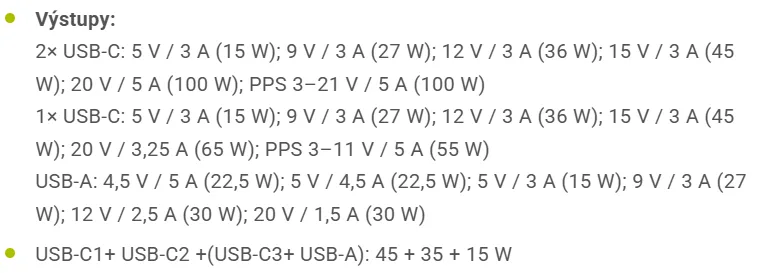
I see that the laptop needs 20V? And the phone 9V? And the watch 5V? Okay, I’ll buy a power supply that can do 5V/9V/12V/15V/20V.
Why? Because I can, and thanks to the USB standard, I know that I can safely charge all devices.
Safely without the possibility of damaging the device with a poorly chosen adapter.
One connector rules them all
The article mentions the hashtag European Union. Here I would like to put a few pieces of information into context.
Long before any EU regulation, manufacturers were transitioning from various connectors to miniUSB or microUSB. Later even to USB-C – why? Because customers wanted it.
Manufacturers also wanted to maintain uniqueness – diverse fast charging protocols with the same connector (see above).
At the same time, the USB standard is evolving in the right direction, and besides higher power – commonly up to 100W, the new standard even supports 240W, it also enables faster data transfer – it’s not a problem to find a cable for a few hundred that delivers 5 Gb/s and more.
And in the EU regulation itself, it is stated that after some time, a revision of the regulation may be possible.
Not all cables are created equal
The author of the article also lamented that not all cables are the same. Yes, manufacturers save, especially when we shop on TME.
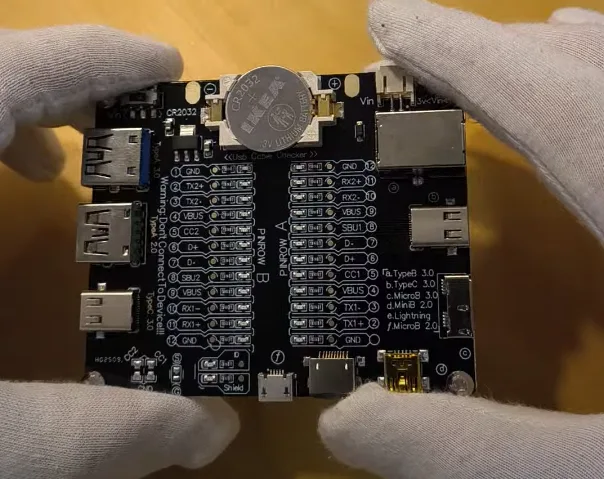
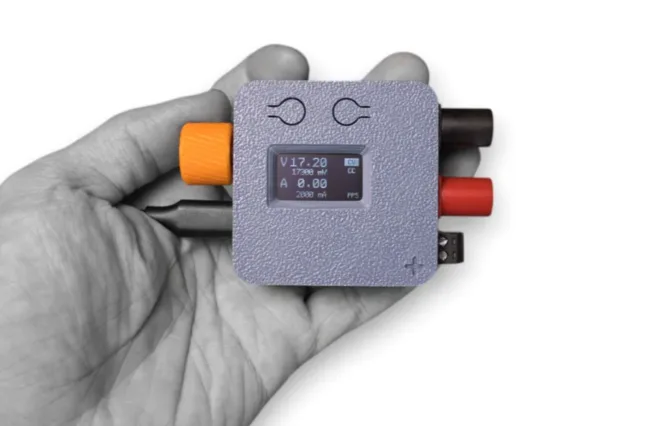
I also wrote an article about this – with a provocative title “I didn’t expect this. I can throw away a third of USB-C cables. They lack connected signals, and I found out thanks to this tester.” These are exactly the cables I received with the purchase of some product, often from Aliexpress.
If you go to Alza, Datart, Mironet, and other stores, you can generally find two types of cables.
Charging cables with slow transfer speeds (well, slow, but still much faster than before) or data cables that can handle x Gb/s but only a maximum of tens of W of transferred power (even those tens of W are enough for charging a laptop).
Or you can buy the best cables that can handle both 100W and more (they must have a chip inside) as well as the highest speeds.
The choice is yours and depends on your wallet.
Nonsense on the networks
The European Union, or rather its regulations, are always a grateful topic ensuring traffic.
- USB was implemented in devices long before the EU issued any regulation. Why? Because it makes sense and customers want it.
- Just because an adapter says “maximum power 200W” does not mean that the charger will send 200W to a small battery watch. It means the highest possible power, and the same charger is suitable for charging headphones, watches, phones, or even laptops.
- Even EU regulations can be revised over time.
- The EU has eliminated devices with often microUSB connectors – due to unnecessary waste that manufacturers (who knows why) still clung to. Even very cheap phones, and there is no reason why new products shouldn’t switch to USB-C.
- Power Delivery as a standard. Power Delivery is a universal fast charging protocol, or rather higher power. And does the device not want higher power? Then the basic voltage – 5V is used.
- The EU has of course stepped on the toes of Apple products (and also partially others) that try to maintain exclusivity, and devices that work with their products must be licensed by them, which this regulation limits.
There’s always a BUT
Of course, nothing is rosy and completely flawless. There are manufacturers who have exploited the USB-C connector for their devices in such a way that the adapter supplied with the USB-C connector does not provide the basic 5V and only after negotiation provides a higher voltage, but directly provides a higher voltage – that is a problem that should be addressed. But such devices are very, very few, and such modified chargers are ALWAYS provided by manufacturers with their devices.
This was the case with the first Parkside products, as far as I know, they have abandoned this solution in new models.
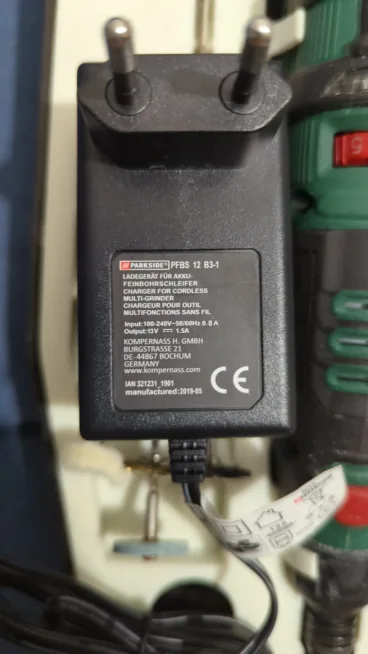
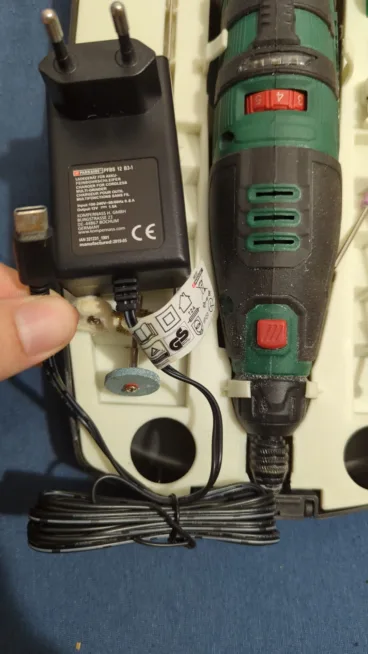
USB-C devices do not work with a USB-C to USB-C cable. This is another vice of some manufacturers. They use a USB-C connector, but when using a USB-C to USB-C cable, it does not work. This is resolved with a USB-A to USB-C cable, but you typically receive such a cable with your device.
I elaborated on this problem here (My older devices do not work with a USB PD charger).
Important message at the end
With USB, you won’t damage your device because you confused the adapter’s voltage – like in the past. With the same adapter and cable, you can charge headphones, watches, phones, and laptops. Same connector, same charging protocol (Power Delivery).
At the same time, this eliminates unnecessary waste.
The article also mentions safety and the possibility of hacking devices through the USB interface. I am not knowledgeable in this area and will not comment on this issue.
Examples (how prices move)
100W cable, USB-C to USB-C, data transfer speed up to 480Mb/s, length 1m, from 199CZK – https://www.alza.cz/
Need something less powerful? 60W, USB-C to USB-C, data transfer speed up to 480Mb/s, length 0.5m, from 142 CZK – https://www.alza.cz/
Faster data? 100W cable, USB-C to USB-C, data transfer speed up to 5Gb/s, length 1m, from 249 CZK – https://www.alza.cz/
More universal? Do you have older devices at home? 4in1 60W cable, transfer speed up to 480 Mb/s, length 1m, USB-C and microUSB adapters, for 299 CZK https://www.alza.cz/
67W charger for 99.9% of devices. With 1x USB-A and 2x USB-C output, supporting the most common standards and all voltages, for 599 CZK – https://www.alza.cz/
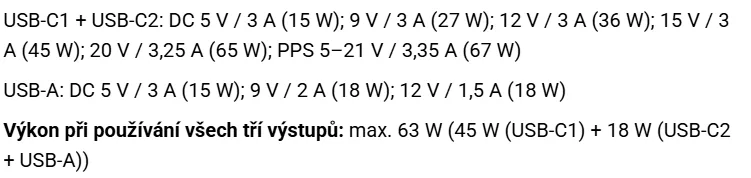
100W charger for everything. With 1x USB-A and 3x USB-C output, supporting the most common standards and all voltages, for 1290CZK – https://www.alza.cz/