Prusament PLA Lightweight: foamed PLA up to 65% lighter. I tried it.

Scale modeling is having a moment. Plenty of aircraft builders are using 3D printing to supplement balsa or even replace it outright. Same story with boats and other stuff. Prusament spotted the gap and released a filament aimed straight at us. Light, matte, and it floats. So I gave it a spin.

What is Prusament PLA Lightweight

Prusament PLA Lightweight is a foaming PLA. During printing it expands and traps microscopic air bubbles. Result: up to 65 % lighter than regular PLA, decent thermal insulation, and it floats on water.

That combination isn’t just for aircraft builders. Boat modelers and cosplayers will find it useful too – anywhere every gram counts.

.chp-spec{max-width:720px!important;margin:24px auto!important;font-family:-apple-system,BlinkMacSystemFont,”Segoe UI”,Roboto,Arial,sans-serif!important;color:#1f2328!important;border:1px solid #e6e8eb!important;border-radius:14px!important;overflow:hidden!important;background:#fff!important;box-shadow:0 4px 18px rgba(0,0,0,.06)!important} .chp-spec .chp-spec-head{background:linear-gradient(135deg,#fa6831 0%,#ff8a4c 100%)!important;color:#fff!important;padding:18px 22px!important} .chp-spec .chp-spec-head .chp-spec-kicker{font-size:12px!important;letter-spacing:1.2px!important;text-transform:uppercase!important;opacity:.9!important;margin:0 0 4px!important;font-weight:600!important;color:#fff!important} .chp-spec .chp-spec-head .chp-spec-title{font-size:21px!important;line-height:1.3!important;font-weight:700!important;margin:0!important;color:#fff!important} .chp-spec .chp-spec-temps{display:grid!important;grid-template-columns:1fr 1fr!important;gap:12px!important;padding:18px 22px 6px!important;margin:0!important} .chp-spec .chp-spec-temp{background:#fff4ee!important;border:1px solid #ffd9c6!important;border-radius:10px!important;padding:12px 14px!important} .chp-spec .chp-spec-temp .chp-spec-label{font-size:13px!important;color:#8a4a2b!important;margin:0 0 2px!important;font-weight:600!important} .chp-spec .chp-spec-temp .chp-spec-value{font-size:24px!important;font-weight:700!important;color:#d9531f!important;margin:0!important;line-height:1.2!important} .chp-spec .chp-spec-table{width:100%!important;border-collapse:collapse!important;margin:0!important;border:0!important;background:transparent!important} .chp-spec .chp-spec-table th,.chp-spec .chp-spec-table td{font-size:15px!important;line-height:1.5!important;padding:11px 22px!important;border:0!important;border-bottom:1px solid #eef0f2!important;text-align:left!important;vertical-align:top!important;background:transparent!important} .chp-spec .chp-spec-table th{width:42%!important;font-weight:600!important;color:#57606a!important} .chp-spec .chp-spec-table td{color:#1f2328!important;font-weight:500!important} .chp-spec .chp-spec-table tr:last-child th,.chp-spec .chp-spec-table tr:last-child td{border-bottom:0!important} .chp-spec .chp-spec-table tr:hover th,.chp-spec .chp-spec-table tr:hover td{background:#fafbfc!important} .chp-spec .chp-spec-foot{font-size:13px!important;color:#6e7781!important;background:#f6f8fa!important;padding:10px 22px!important;margin:0!important;border-top:1px solid #eef0f2!important} .chp-spec .chp-spec-foot a{color:#d9531f!important;text-decoration:underline!important} @media (max-width:520px){ .chp-spec .chp-spec-temps{grid-template-columns:1fr!important} .chp-spec .chp-spec-table th,.chp-spec .chp-spec-table td{display:block!important;width:auto!important;padding:4px 16px!important;border-bottom:0!important} .chp-spec .chp-spec-table th{padding-top:12px!important;font-size:13px!important} .chp-spec .chp-spec-table td{padding-bottom:12px!important;border-bottom:1px solid #eef0f2!important} .chp-spec .chp-spec-head,.chp-spec .chp-spec-foot{padding-left:16px!important;padding-right:16px!important} .chp-spec .chp-spec-temps{padding:14px 16px 4px!important} }

Specifications

Prusament PLA Lightweight Natural

Nozzle temperature

215–235 °C

Bed temperature

50–60 °C

Filament diameter1.75 mm
Diameter tolerance±0.03 mm
Nozzle0.4 mm brass (standard or CHT)
Print surfaceSmooth PEI / Satin
Recommended printersCORE One+ / Gen 2, CORE One L/+, XL/+, MK4S

Source: prusa3d.com

Test: Bulánek on the scale

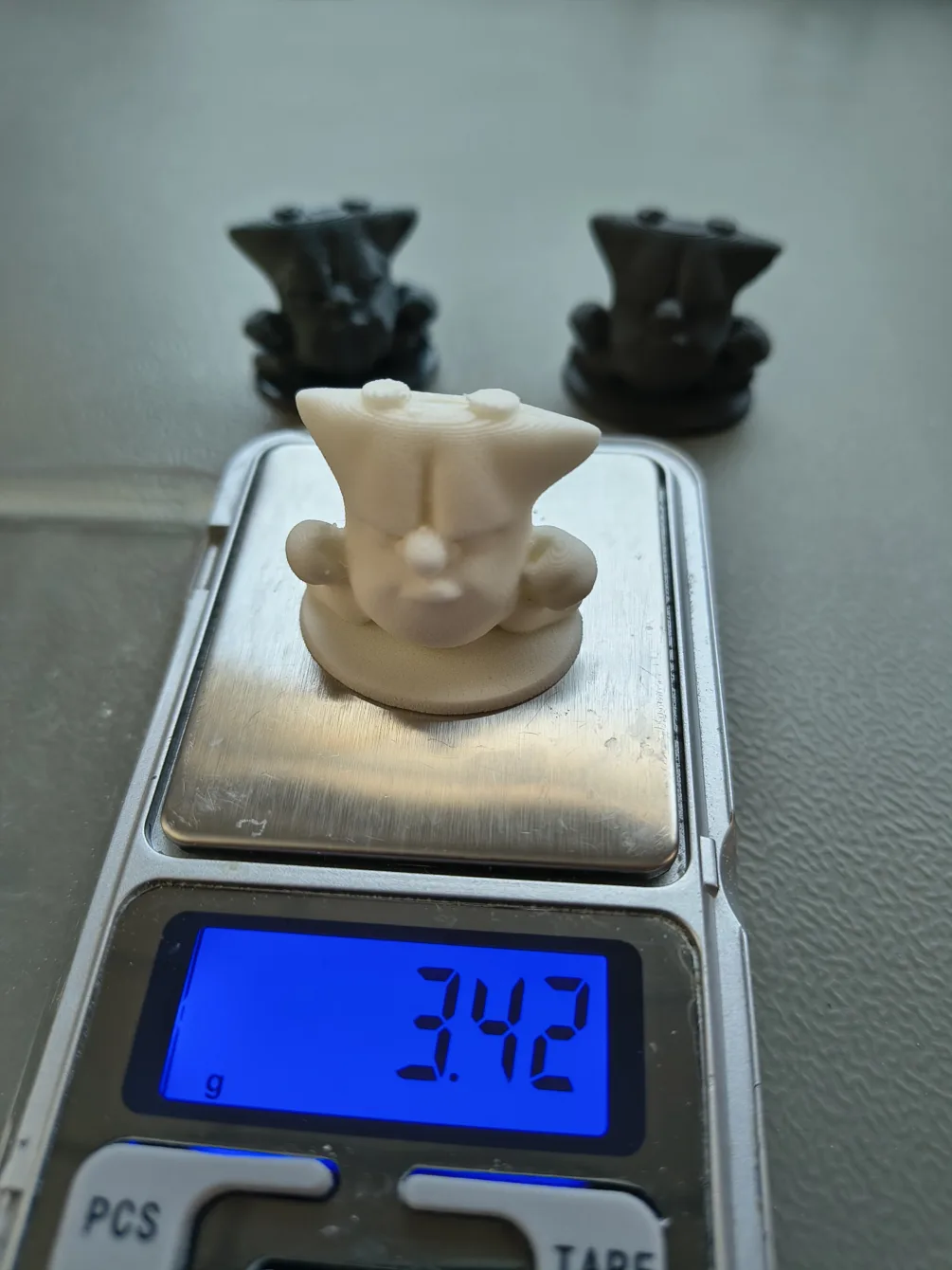
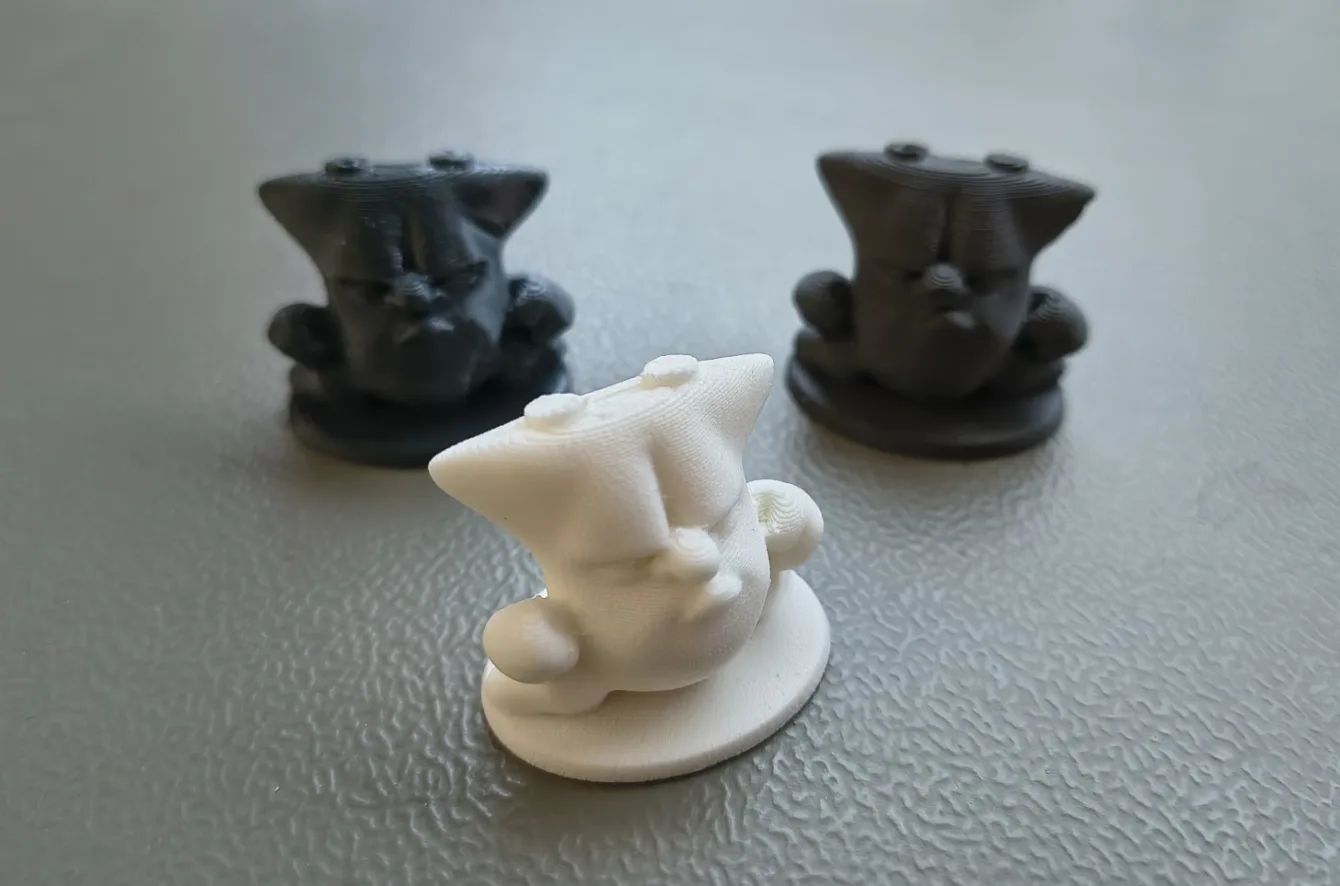
So how light is it really? I printed the usual Bulánek again 😀
Standard size, 100 % infill, 0.25 mm layers, 0.4 mm nozzle.

Important note: this model is a terrible choice for this filament.
But what can I say – I print Bulánek from everything.

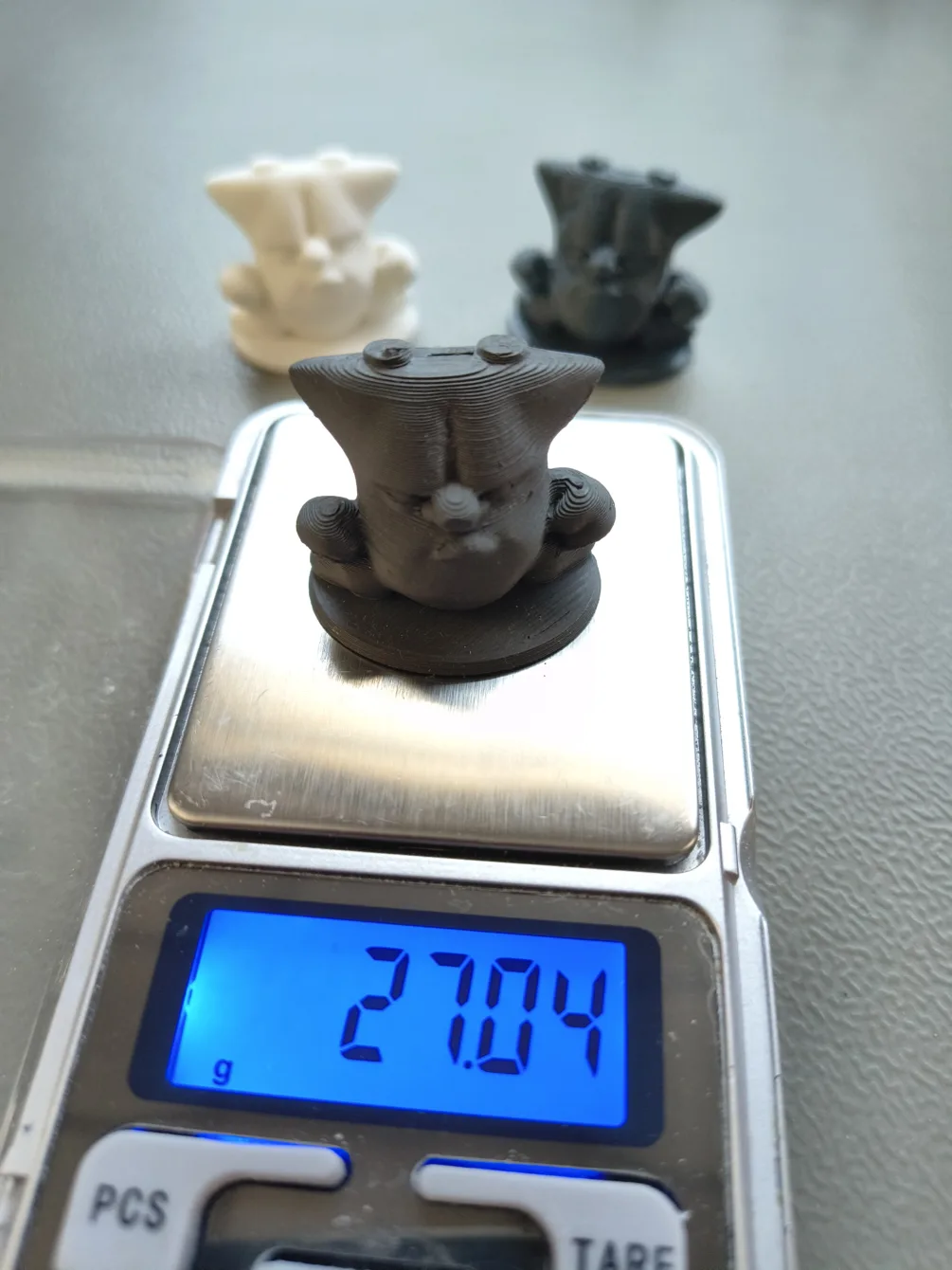
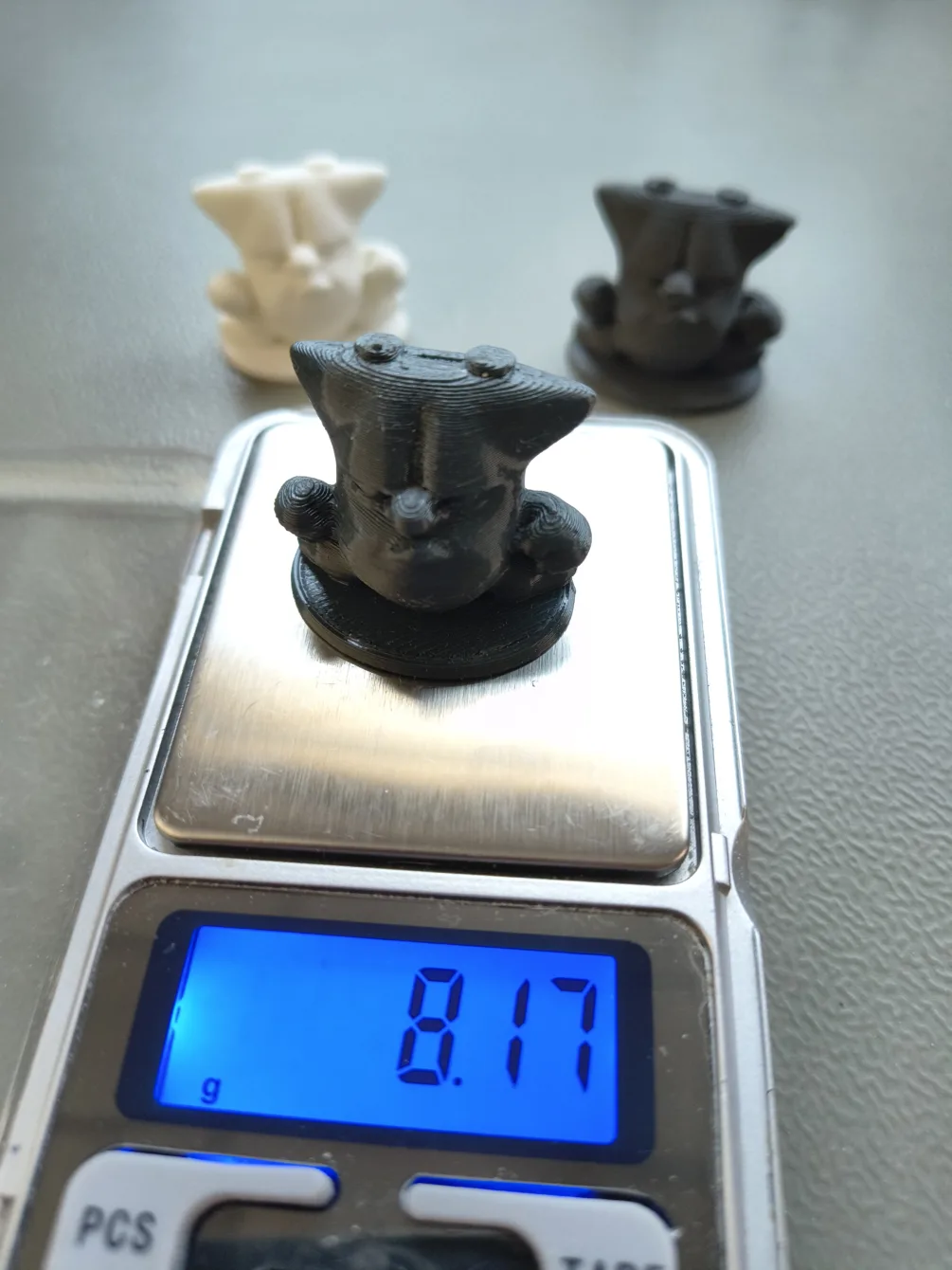
Bulánek in Prusament PETG weighs 8.17 g. Same part in PLA Lightweight comes in at 3.42 g. That’s 58 % lighter.
Regular PLA would have landed almost the same – density difference between PLA and PETG is tiny.

Colors and NFC

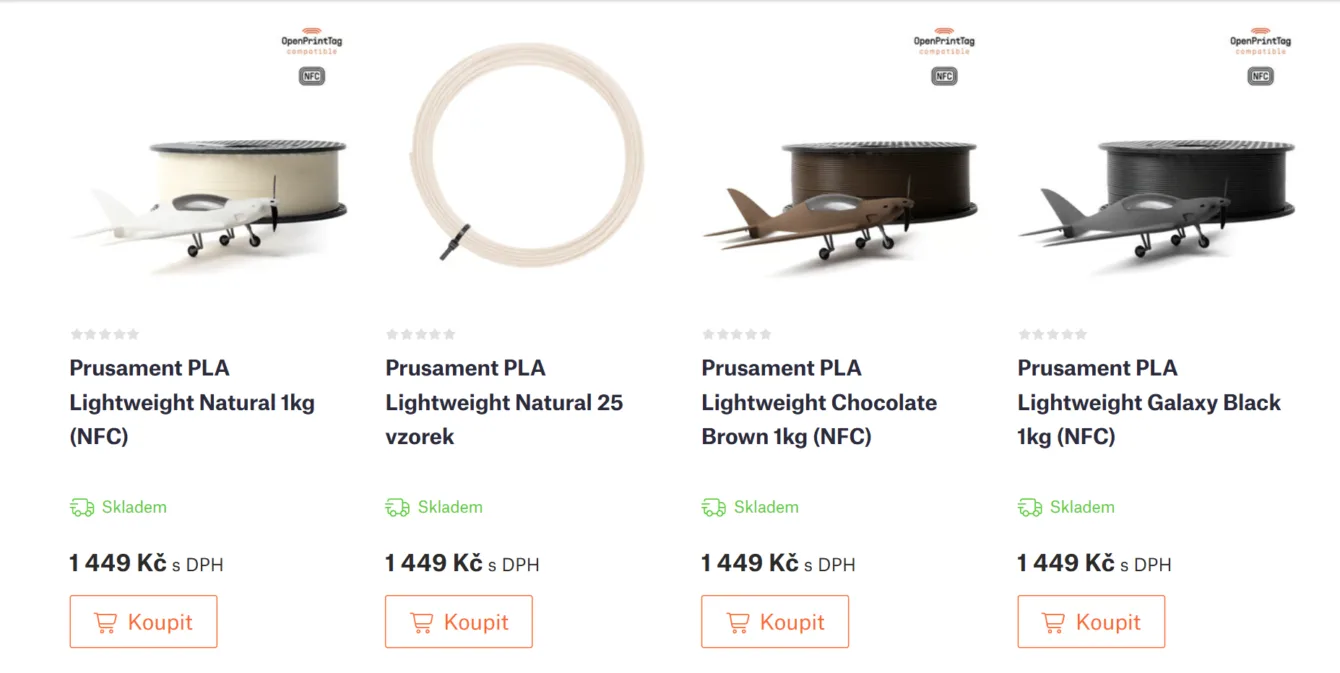
Five colors available: Natural, Galaxy Black, Chocolate Brown, Army Green, and Coral Orange.

The spool carries a rewritable NFC tag in the OpenPrintTag standard. Works offline and the Prusa app can read it. Besides material data it also stores measured production values: diameter, weight, and ovality.

Foaming and print temperature

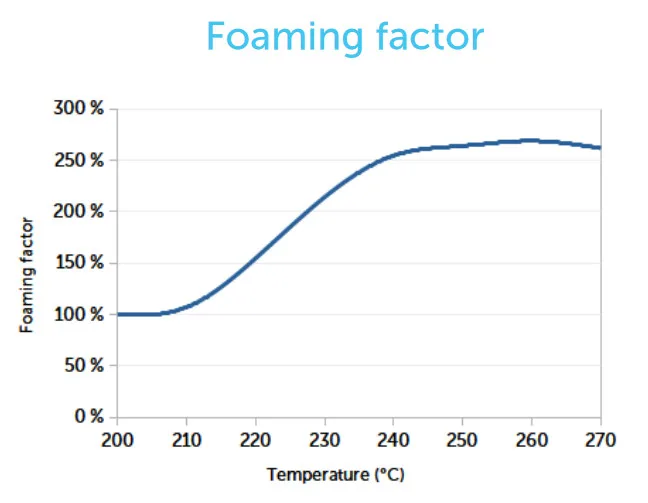
How much the filament foams depends on print temperature. Higher temperature = more expansion. Downside: noticeably more stringing.

What it’s good for

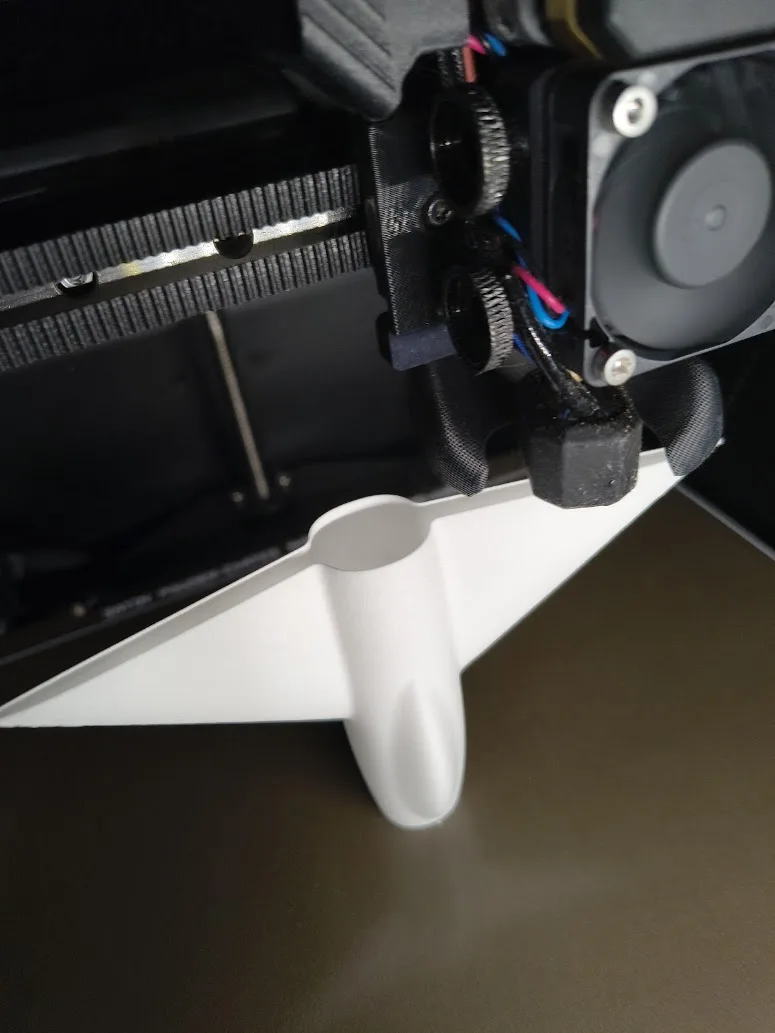
As you’ve probably guessed, this stuff is weird. Retraction doesn’t work because the material keeps expanding, so it’s best printed in one continuous motion – ideally in spiral vase mode. The opposite of ideal is printing a Bulánek 🙂

Prusa also recommends printing only one model at a time and enabling Avoid crossing perimeters in PrusaSlicer.

A material profile is already available in PrusaSlicer.

My take:

PLA Lightweight is up to 65 % lighter than regular PLA, has a nice matte finish that hides layer lines, insulates reasonably well, and floats. You can even cut it with a sharp knife.

On the flip side it strings badly, retraction is useless, it scratches easily, and heat resistance is low.

It printed without drama. Just remember it’s hygroscopic, so dry it before printing. With the right model, printing is trouble-free.

Prusament PLA Lightweight is available at https://www.prusa3d.com/

Share the article:
Show your
Maker soul!
Buy a T-Shirt
Coffee for Chiptron
Give a boost to the next article

Related Articles

Prusa3D has released a new filament, and it’s not just any filament. It’s said to be the brightest on the market. I bought a sample and tried it out. You need to prepare the printer – a textured or satin…

Alza is on the move. Alza clearly sees 3D printing as a path for further growth, and after launching their PLA filament with the unexpected name Alzament, they are now introducing PETG material in two variants – PETG and Hyper…

New printer from Prusa Research: Core One L – double printing volume, more uniform bed heating, support for OpenPrintTag, and other great features.

Imagine having a printer at home with four or five filaments. Until now, you could only print models in those exact four or five colors—and nothing more. Prusa ColorMix removes this limitation. By intelligently alternating layers of different colors, your…

Akvárium z cívky

Anyone who 3D prints knows the feeling: the filament runs out, leaving you with a sturdy plastic spool. What to do with it? The new generation of Prusament spools is designed to be disassembled and reused. The Upcycling NEW Prusament…

In 3D printing, proper adhesion of the first layer is crucial for a successful print. However, each material requires a slightly different approach. The build plate—its type and cleanliness—has a significant impact on the model’s adhesion to the plate, but…
Trends