Raspberry Pi keeps getting more expensive, and now we finally know why. The Russian military is buying them by the crate to put in drones.
All right, that’s an exaggeration. But only partly. Raspberry Pi boards really are inside Russian drones, and Ukraine’s military intelligence directorate, HUR, regularly pulls them out. The latest example is the Geran-5 K5-K, which HUR classifies as a small cruise missile. The real reason prices are going up is something else, and I explained it in my article about Raspberry Pi price increases.
What Raspberry Pi is normally used for
Raspberry Pi was launched in Cambridge, UK, in 2012 as an affordable computer for teaching programming. A board about the size of a credit card, a full Linux system, a 40-pin GPIO header, and a price of around $35 (those were the days).
It quickly moved from classrooms into makers’ projects. Home Assistant, Pi-hole, a print server, OctoPrint for a 3D printer, a retro console, a home NAS, a weather station, a bird-feeder camera.
Compute Modules are also used in industry, for example in machine control panels and information displays.
Why it’s unusual to find one in a weapon
Military electronics usually have an extended operating temperature range and resistance to vibration. They use much more rugged components, conformal coating on the boards, and parts that will remain available for decades.
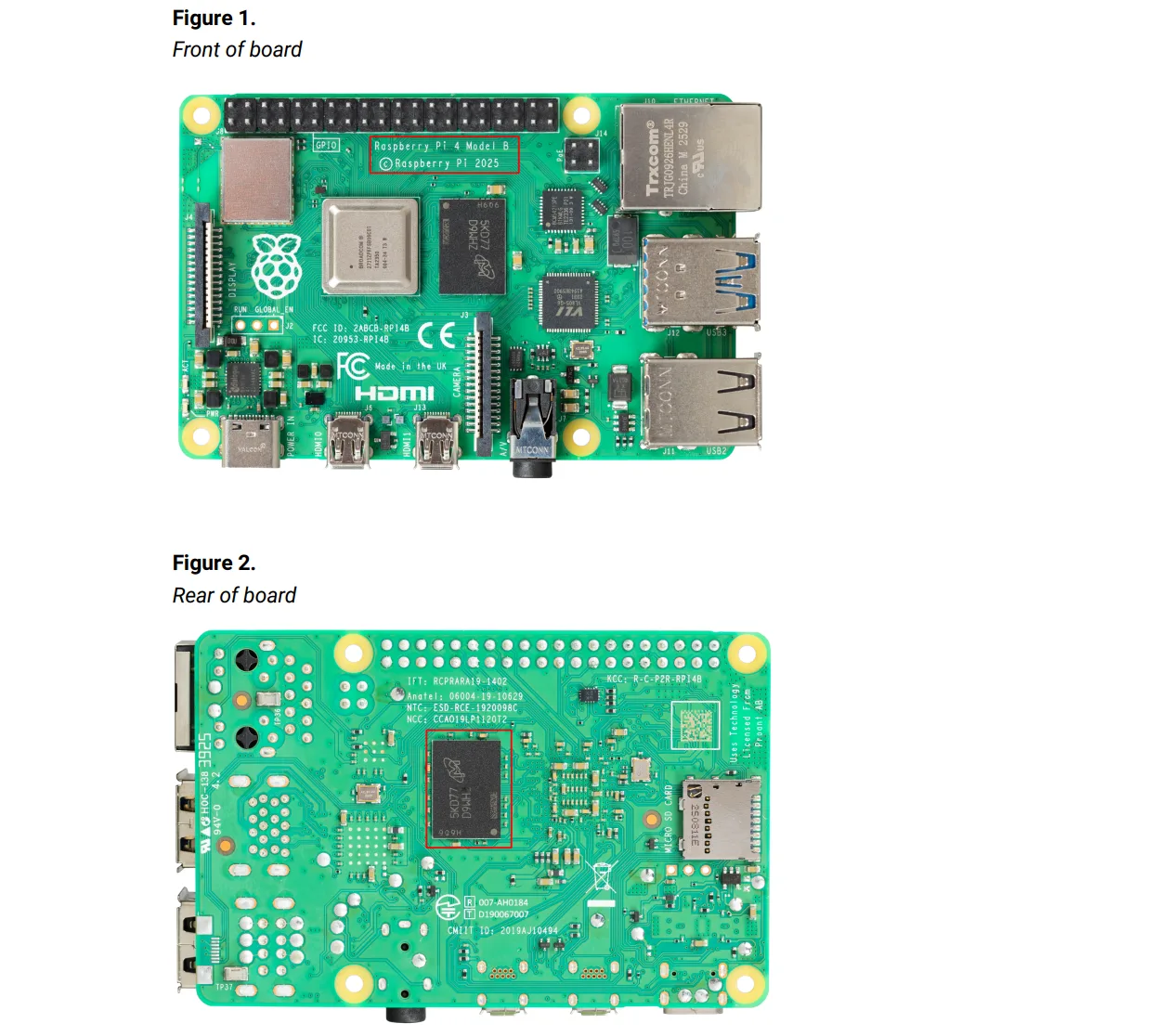
The Raspberry Pi 4 wasn’t designed or certified for the usual demands of military electronics – ruggedness, temperature, vibration. In its product brief, the manufacturer gives an operating temperature of 0 to 50 °C and says it’s designed for typical room-temperature conditions. The system runs from a microSD card, which is prone to damage with frequent writes or a power interruption (for example, due to vibration).
So why do the Russians use it? A drone flies only once, and the board inside it needs to last just a few hours. Raspberry Pi boards are available almost anywhere in the world, they run Linux, and any computer science student can program them.
It’s not the cheapest option, though. The heise newsroom wondered why the Russians use Raspberry Pi 4 boards when Chinese boards with Rockchip or Allwinner chips can do similar things for less. Most likely because every developer knows Raspberry Pi, and its software is well tested.
Raspberry Pi isn’t the only consumer-grade computer HUR has found in drones, either. In one version of the Geran-2, it found an Nvidia Jetson Orin Nano developer kit – a board for machine vision and AI.
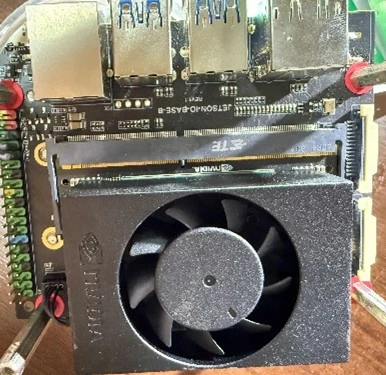
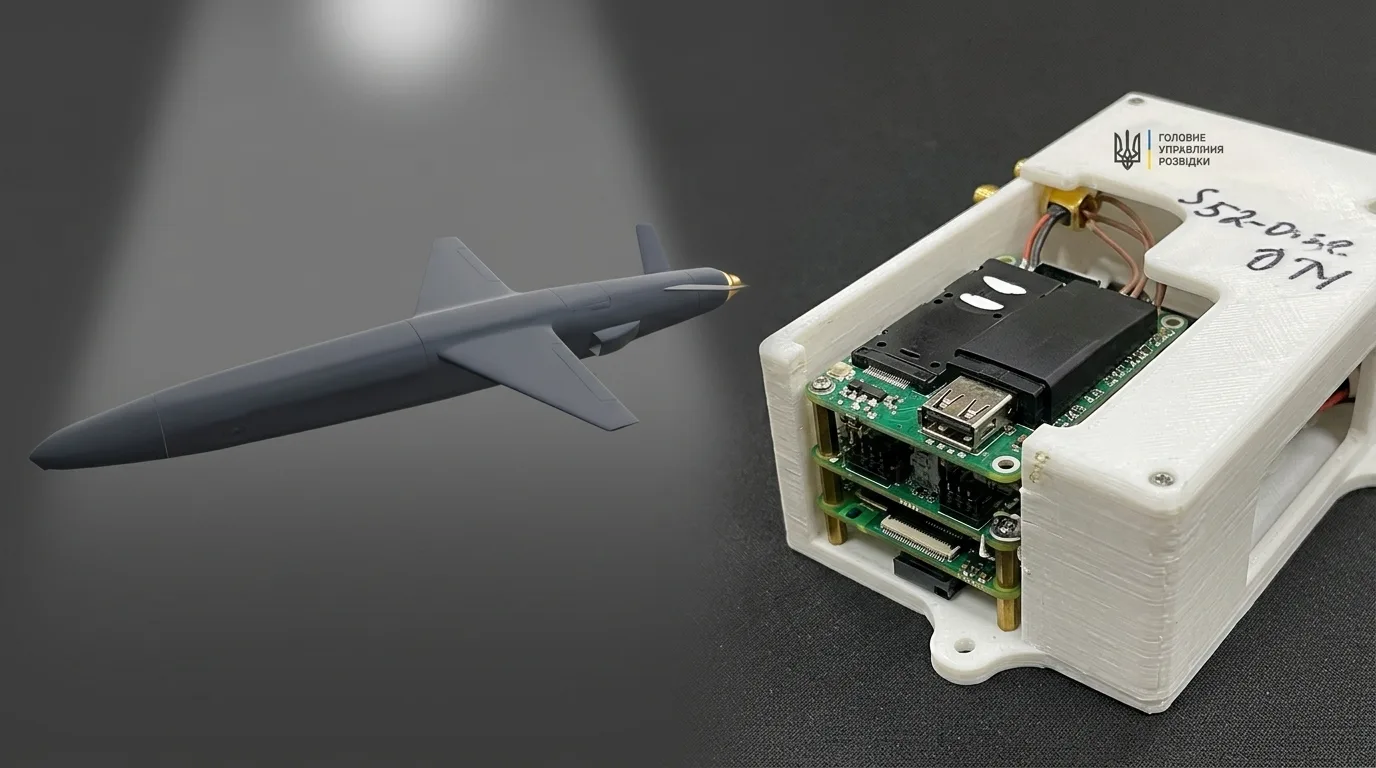
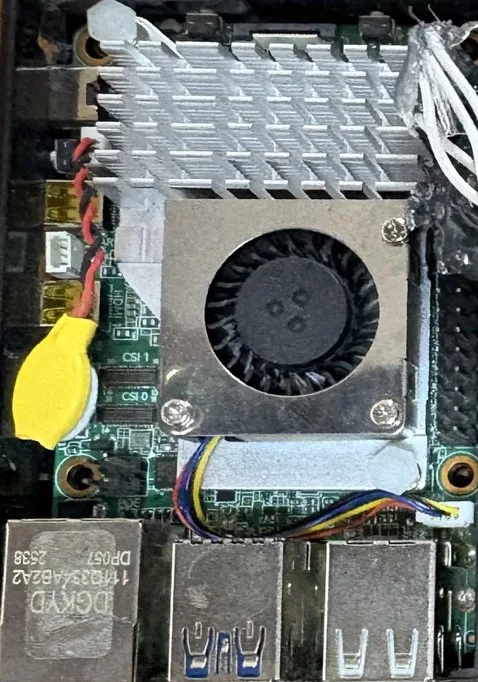
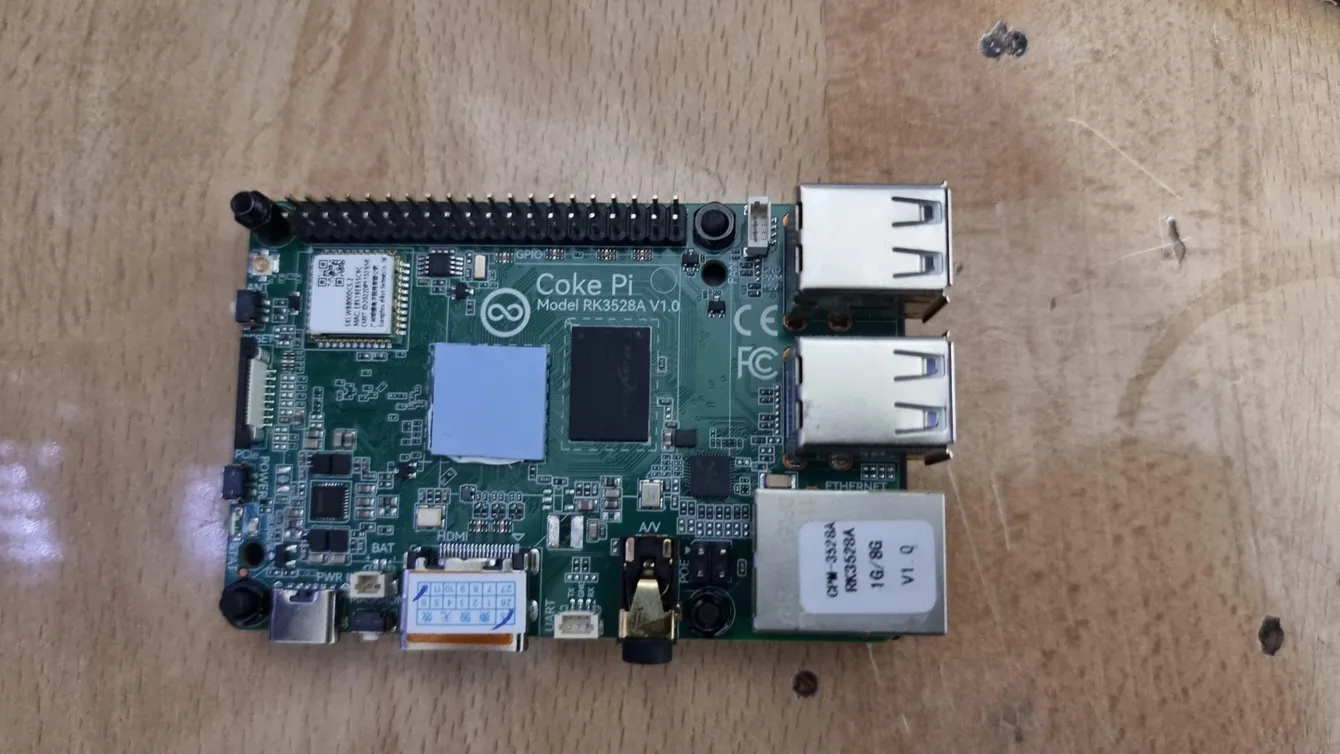
The latest Geran-5 K5-K contains a Chinese clone, the Coke Pi, alongside the original. It uses visual navigation: images of the landscape from a camera are compared with stored reference images. HUR found it inside a labeled plastic enclosure.
Where HUR has found Raspberry Pi boards
HUR takes apart downed drones and publishes photos of the components it finds on the War&Sanctions portal. Raspberry Pi shows up there repeatedly:
- Geran-2: According to HUR, two things are key to its production: a Chinese piston engine and a Raspberry Pi 4 (United24).
- Geran-3: A Raspberry Pi 4 on the tracker board, made by Raspberry Pi Ltd in the UK (HUR).
- Geran-5: A Raspberry Pi-based tracker, along with 3G/LTE modems and a Chinese mesh modem (Euromaidan Press). Mesh networking works on the same principle as MeshCore, except that it carries video instead of short messages.
- Molniya-2R: A reconnaissance drone with a Raspberry Pi 5, a Chinese mini PC running licensed Windows 11, and a Starlink terminal (ArmyInform).
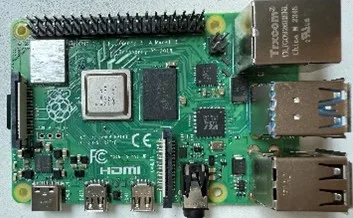
- Geran-5 K5-K (November 2026): An original Raspberry Pi 4 Model B alongside a Coke Pi (DroneXL).
At the Alabuga factory where Geran drones are made, the unit containing a Raspberry Pi is called “Borscht.” It’s reportedly been installed in drones since 2023. A board made to teach children to program is now being used to kill children.
How Raspberry Pi boards get to Russia
Raspberry Pi doesn’t sell anything to Russia. But the Kyiv School of Economics estimated that around $5 million worth of Raspberry Pi products reached the country in a year. They went through resellers, mostly in China, who bought the boards and passed them on without the manufacturer’s knowledge.
According to The Times, Raspberry Pi CEO Eben Upton was shocked by the data. The company worked with KSE to identify resellers with links to Russia and banned its partners from doing business with them.
I’ve also looked at the electronics supply chain in my article about the LTE implant in Ledger and Trezor crypto wallets.
So are drones to blame?
No. An estimated $5 million a year is a drop in the bucket compared with the company’s revenue – around $266 million in 2023. The Telegram channel Polkovnik Gsh claims Russia bought more than 40,000 units, but nobody has independently verified that. And even if it’s true, that’s a fraction of the millions of boards Raspberry Pi sells every year.
Raspberry Pi prices aren’t going up because of the war, but because of AI. RAM is in short supply because data centers are snapping it up, and Raspberry Pi has raised prices five times since December 2025. For current prices on individual models and where to get the best deals, see my article about Raspberry Pi price increases.