STMicroelectronics released the first microprocessor (don’t confuse with microcontroller). The new family of micoprocessor is called STM32MP1.
The STM32MP1 combines ARM® Cortex®-A7 32-bit RISC @650 MHz and ARM® Cortex®-M4 @209 MHz.
The key features are Arm® NEONâ„¢ and Arm® TrustZone®, the support up to 1 GB 16 or 32 bit DDR3/DDR3L-1066 a LPDDR2/LPDDR3-1066, 6x I2C (up to 1 Mbps), 4x UART, 6x SPI (up to 50 Mbps), 4x SAI, HDMI-CEC, 3x SDMMC, 2x USB 2.0 high-speed, 1x USB 2.0 high speed OTG, 10/100 Mbit or gigabit ethernet, 8 – 14 bit camera intarface with communication speed up to 140 MB/s.
The graphical feature belongs the supporting of WXGA (1366×768) @60 fps and also supporting of HW acceleration based on OpenGL® ES 2.0.
The STM32MP1 contains 5x 16bit ADC (samplerate up to 5 MHz with 12bit resolution), 2x 12bit D/A (up to 1 MHz).
The new microcontrollers and microprocessors have to include also HASH (MD5, SHA-1, SHA256) and true random generator (2x) and 2x CRC uint.
Benchmark results looks really interesting, Cortex®-A7 2470 DMIPS @650 MHz and also Cortex®-M4 with 261 DMIPS @209 MHz.
The big benefit for developers is the support of Cortex®-M4 in STM32MP1 in STM32CubeMX.
Cortex®-A7 supports OpenSTLinux distribution.
And what is power consumption?
The power consumption for running Cortex®-A7 and Cortex®-M4 is 487 mW (2xA7 + M4, Cortex®-A7 @648 MHz, Cortex®-M4 @209 MHz) for Run mode.
Stop mode (cores are stopped) the consumption is only 26 mW, 26 uW for Off/Bat mode.
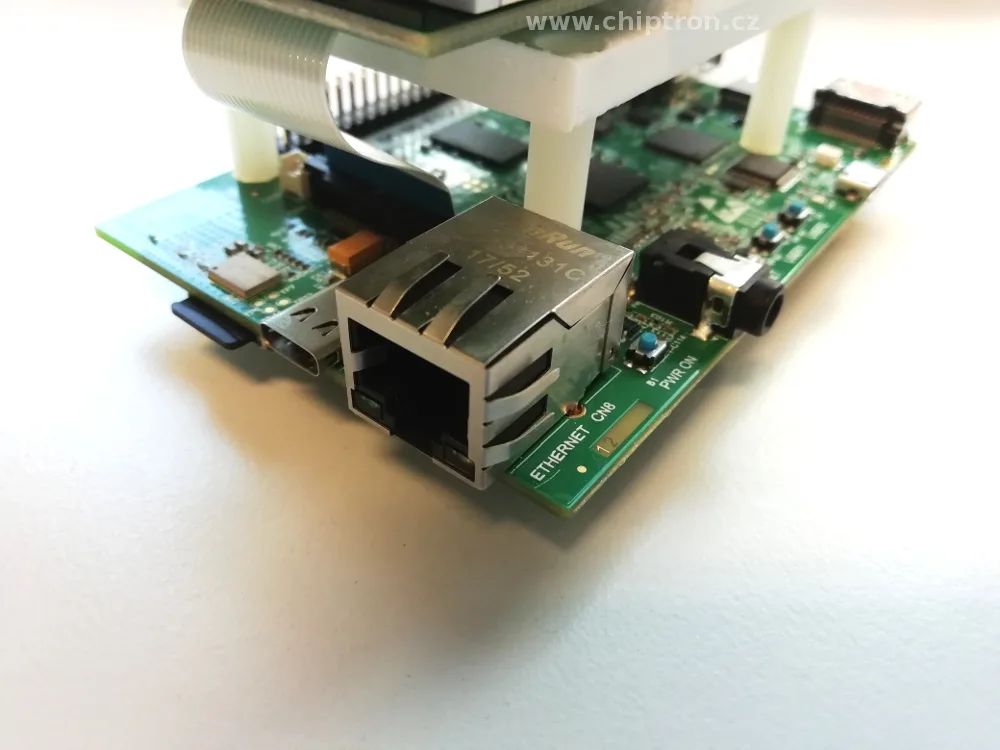
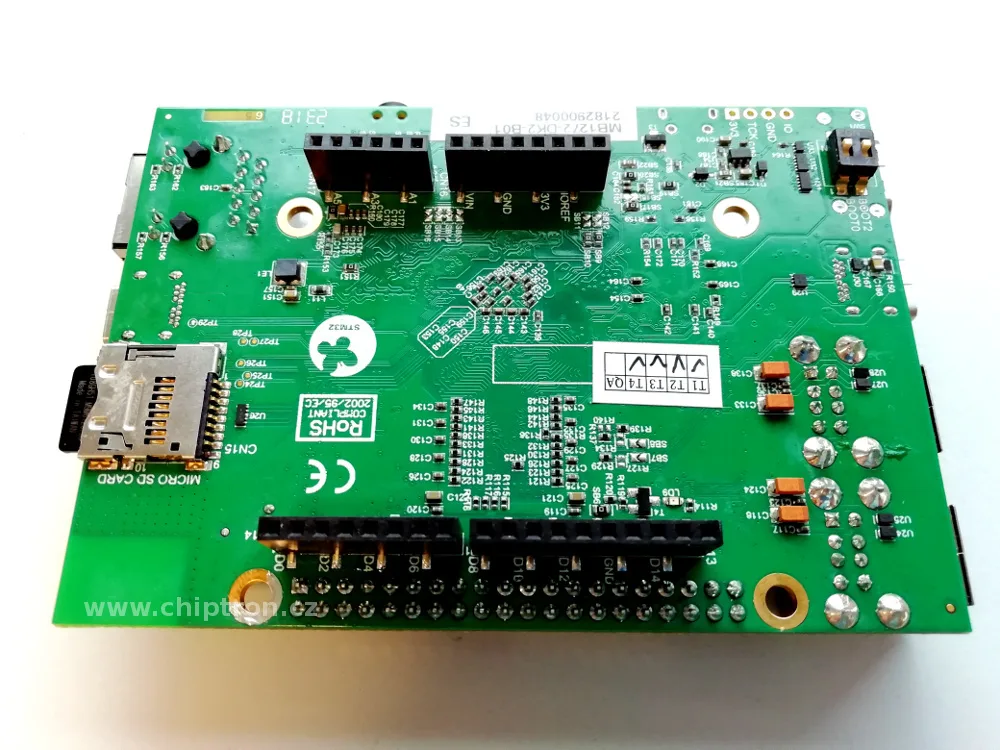
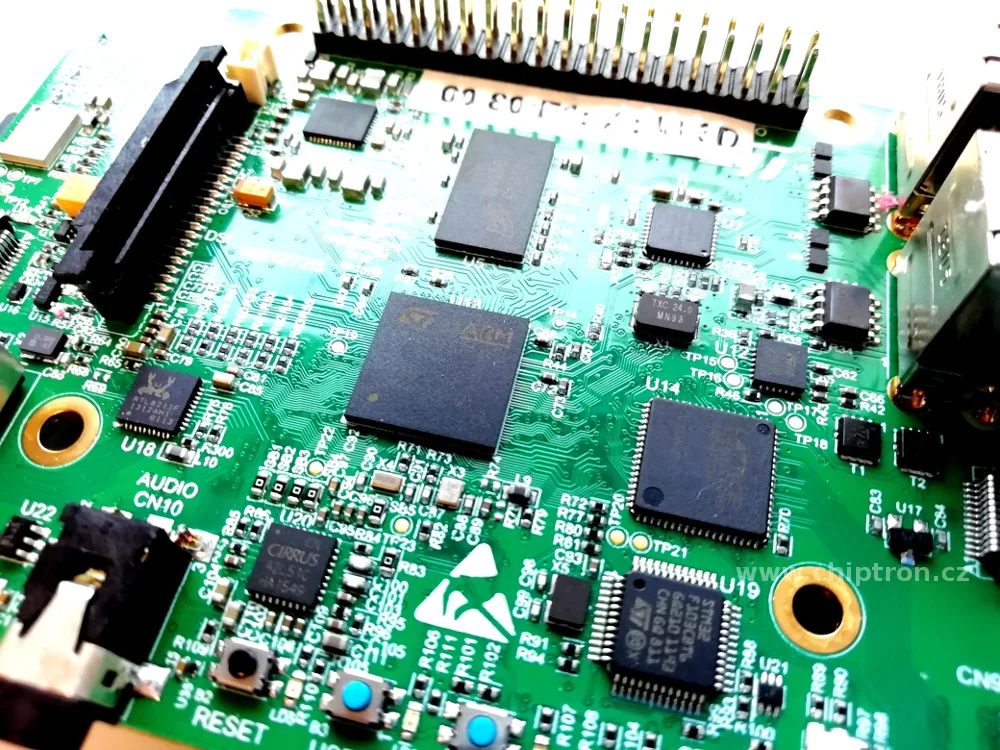
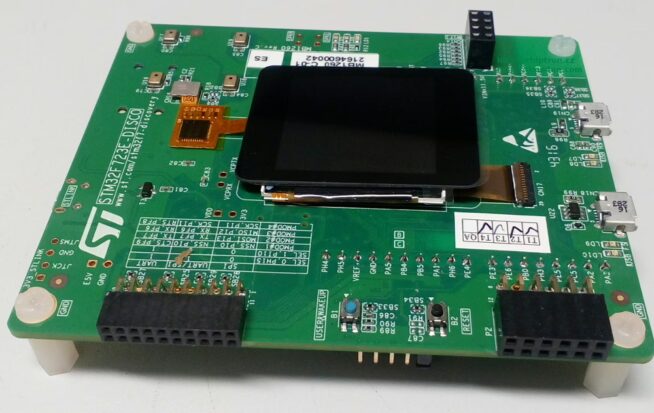
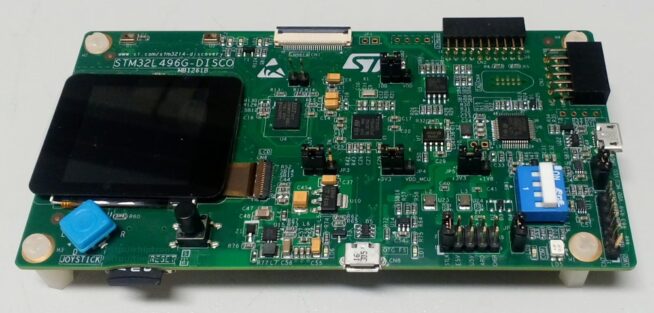
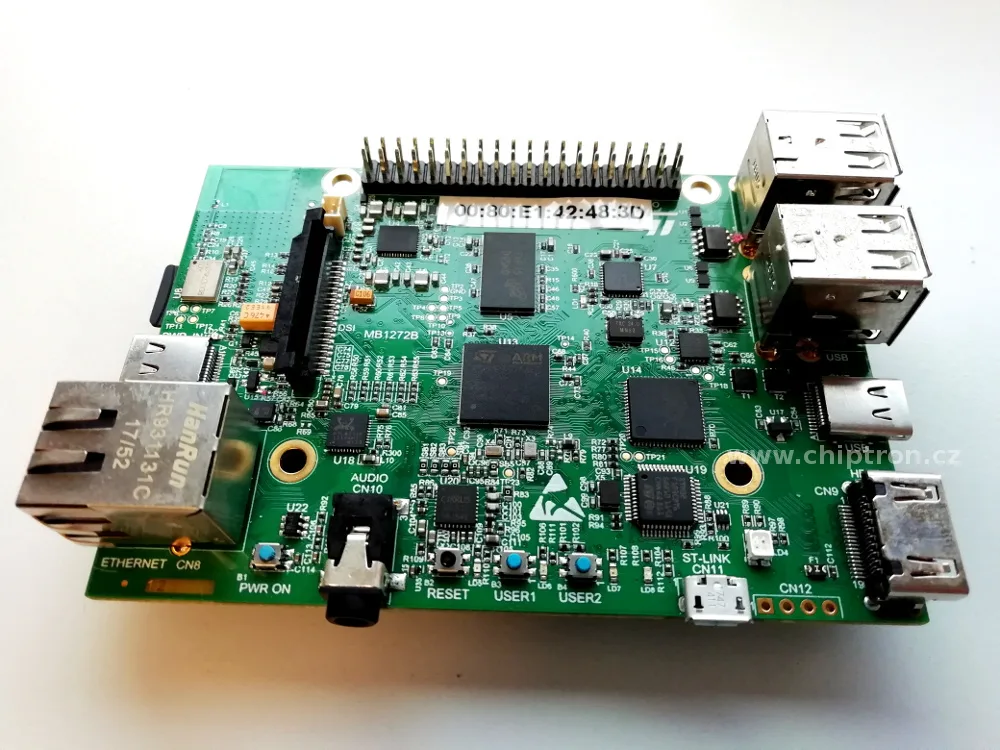
What development boards can you expect? Discovery board in two variants.
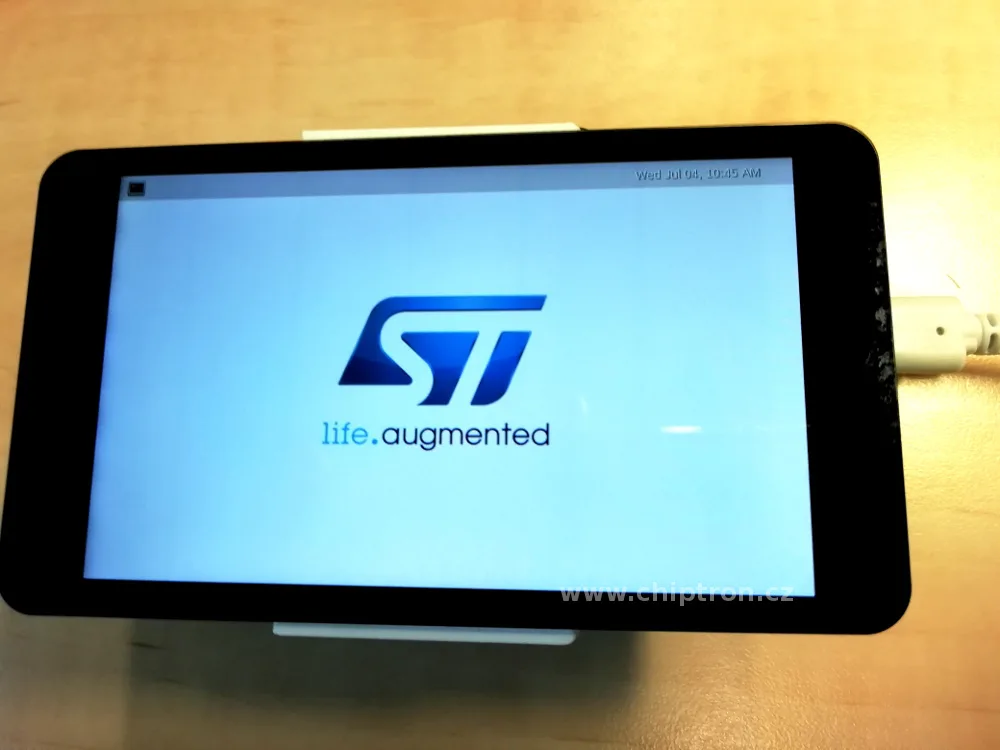
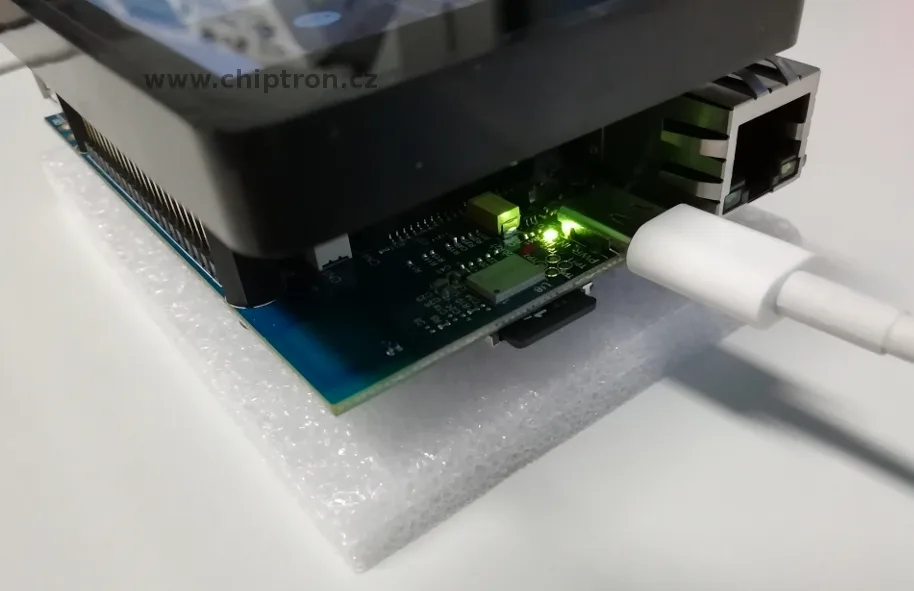
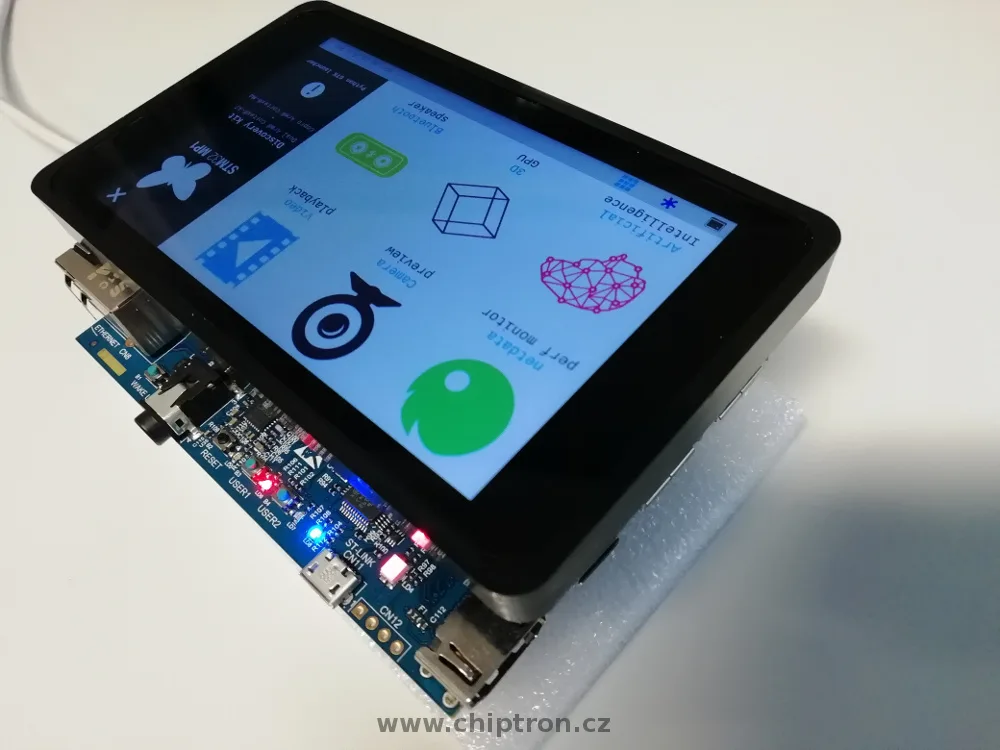
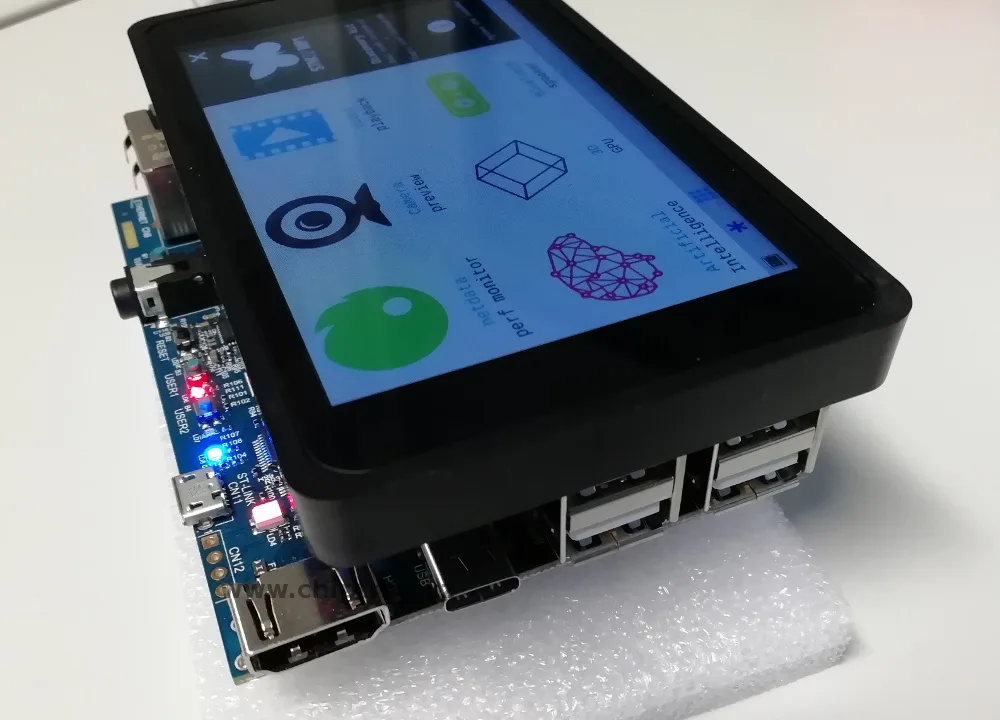
Cheaper version for 69 USD, and more expensive variant (with +MIDI DSI display and Wi-Fi BT module) for 99 USD (photogallery below).
You can also buy Evalution board for 400 USD.
The third-party companies prepare SoM modules and development board with STM32MP1.
The software support is STM32CubeMX, IDE like jsou Keil, AC6, IAR and also STM32 TrueStudio.
Press release: https://www.st.com/content/st_com/en/about/media-center/press-item.html/p4140.html
STM32MP1 https://www.st.com/content/st_com/en/search.html#q=stm32mp1-t=products-page=1
The video from the first start:
Photogallery: