When a crack shows up on a print, a gap from poor layer adhesion, or an ugly support scar, you usually grab several different tools. Weld the crack with a plastic welder, fill the gap with a 3D pen or glue, then smooth everything with a file, sandpaper, or micro soldering iron.
The application describes a tool that packs those three functions into a single handle.
The filing notes that existing devices handle only one technique, yet real repairs often need a combination.
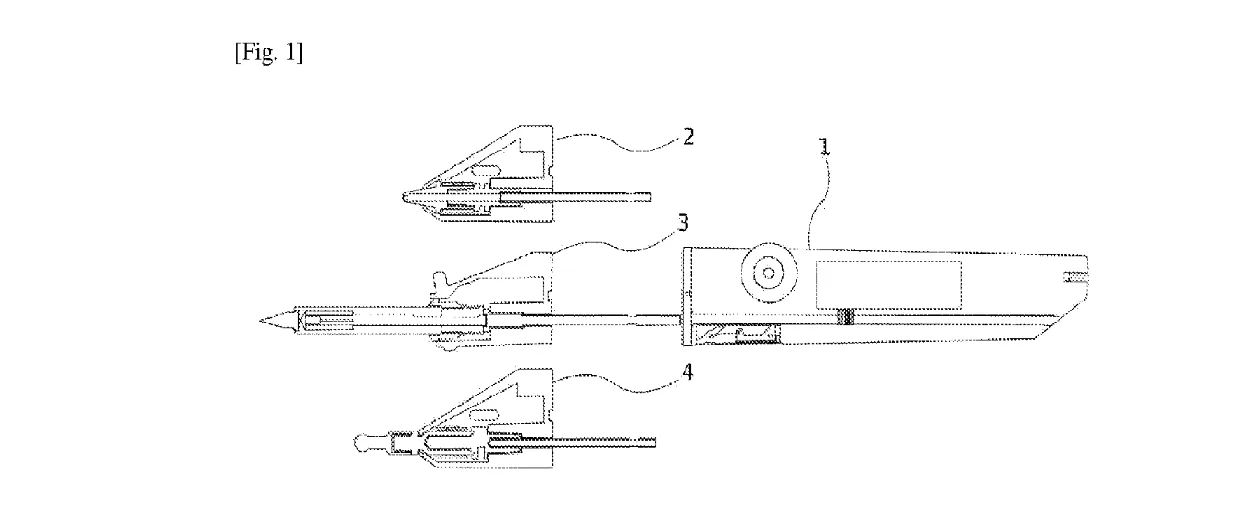
Three attachments covered in the application:
- Extrusion head with a nozzle that pushes out molten filament — basically a 3D pen
- Melting tip shaped like a cone for joining and welding cracks
- Smoothing attachment with a forming tool to level the surface
Fill material can be the same filament you printed with, so the repair matches in color and properties.
How it’s supposed to work
The device splits into two parts. The body holds the battery, controls, filament drive, and the connector for the attachment. Filament feeds from the body, not the head.
The attachment carries the heater, temperature sensor, the actual tool, and the interface that lets the head talk to the body. The device detects what’s plugged in and sets temperature and behavior accordingly. A locking mechanism keeps the attachment from backing out on its own.
The clever bit is the connector. It doesn’t just carry power and signals — it also acts as the structural mount and, on the extrusion head, the filament guide.
That’s why the connector looks different on each attachment. Extrusion and smoothing versions use a tube the filament runs through. The melting tip uses a solid metal rod because you push hard when welding plastic, and a hollow tube wouldn’t survive the load. The application claims this is exactly why these functions haven’t been combined in one practical tool before.
Will it hit the shelves?
A published patent application is not a product announcement. Companies routinely protect designs that never reach production or show up years later in different form.
The application also faces a rough EPO search report. Examiners found an earlier Korean filing that they say challenges the novelty of some claims. The applicant responded this June by narrowing the claims and spelling out more precisely what they consider the invention.
Sources
- WO 2026/166569 A1, Handheld multitool device for 3D print, PCT/CZ2025/050013, published 13 Aug 2026
- International search report by the EPO for the same application