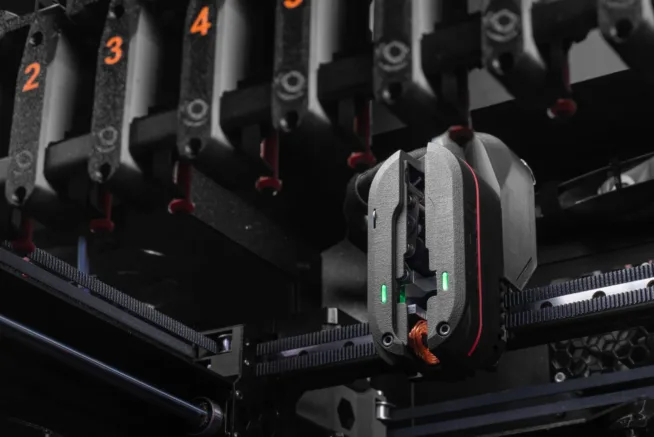
Tool swap in a second with practically zero waste. That’s what YUDX promises – a toolchanger one student built and put entirely on GitHub for free. Eight tool heads, a single motor for everything, base built on a Voron 2.4. Video at the end of the article.
The author goes by Dumpling lab and drew inspiration from Bondtech INDX. He solved the mechanics differently, though. Everything’s on GitHub under GPL-3.0: STL and STEP files, G-code macros, BOM, and a 42-page assembly guide.
Refined mechanics inside the extruder
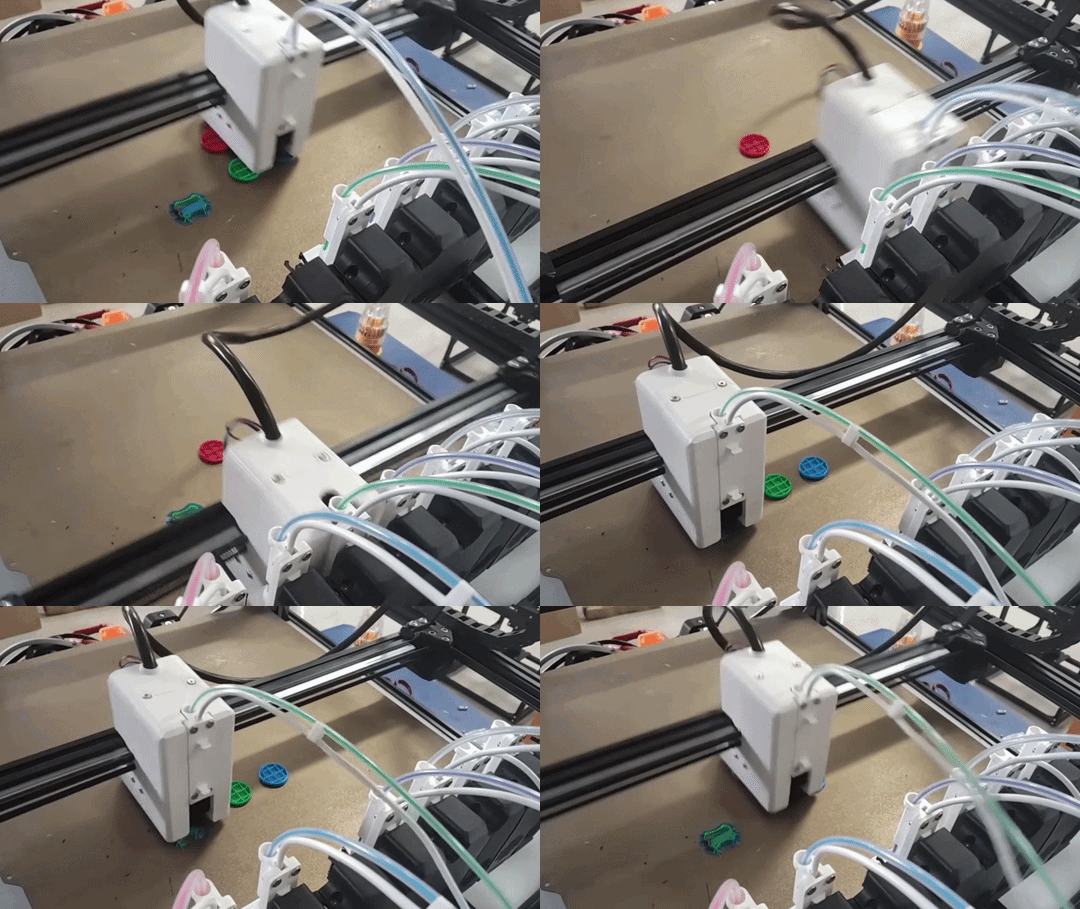
This is probably the most important and polished part of the whole project. YUDX has no servo or second motor to unlock a head. Just one stepper in the extruder that handles both filament feeding and the actual tool change.
It works through a one-way bearing in the drive gear. Up to about 3 mm of retraction the extruder behaves normally. Push the motor past that and the bearing locks, the pinion engages a rack, and the whole assembly swings sideways. That opens the drive wheels and lets the head detach. Extrude again and everything clamps back together.
So a deeper retraction triggers the swap. No extra electronics, no extra actuator – just mechanics.
Eight heads, one extruder
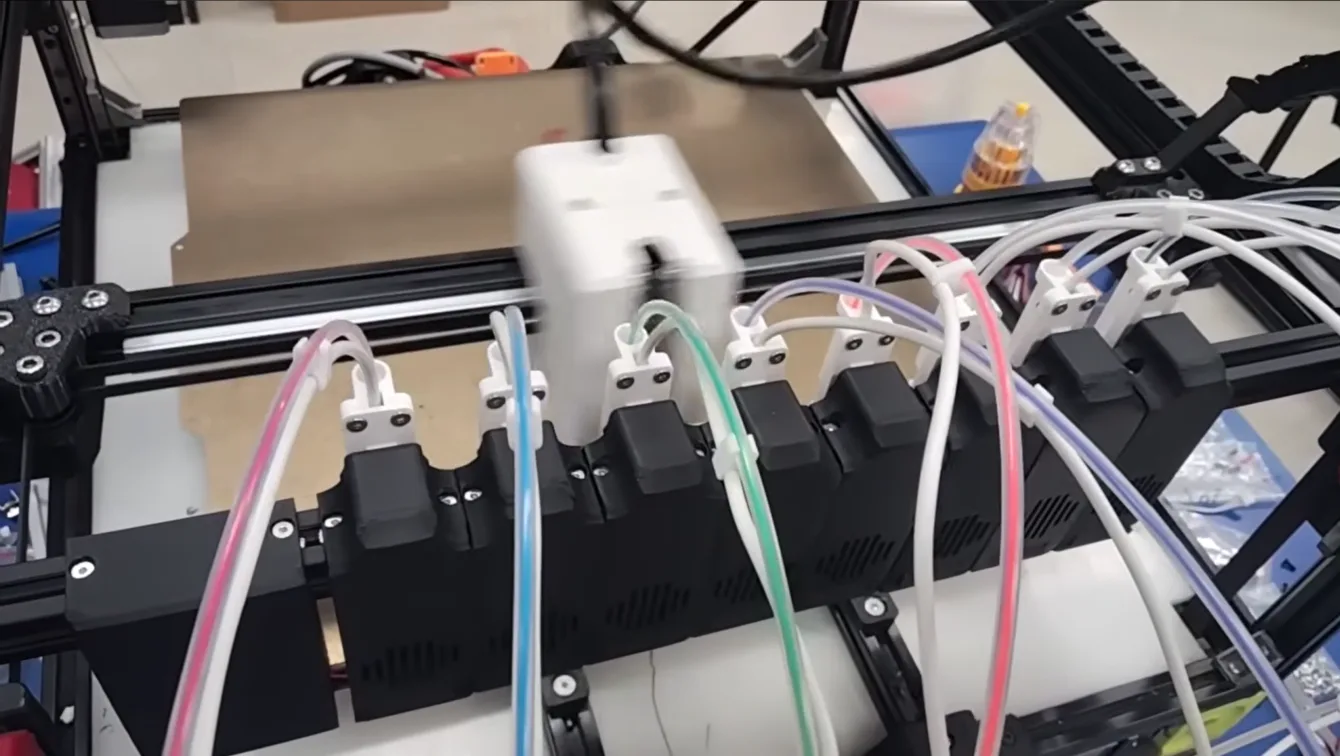
The tool heads are dumb. They only carry the hotend and part cooling. The feeding mechanism stays on the printer and is shared across all heads.
That saves money – you don’t buy eight complete extruders with motors the way Prusa XL or Snapmaker U1 do. The author used eight Bambu Lab hotends, which also turned out to be the biggest line item in the budget. Each head has its own part cooling; the print head itself carries the usual print cooling fan.
Magnets and steel balls hold the head in place. In total that’s 32 neodymium magnets (15×5×3 mm) and 32 4 mm balls. The balls seat into fixed points, so the head returns to the exact same position after every pickup.
Runs on RepRapFirmware
YUDX uses RepRapFirmware. The design tops out at eight tool heads.
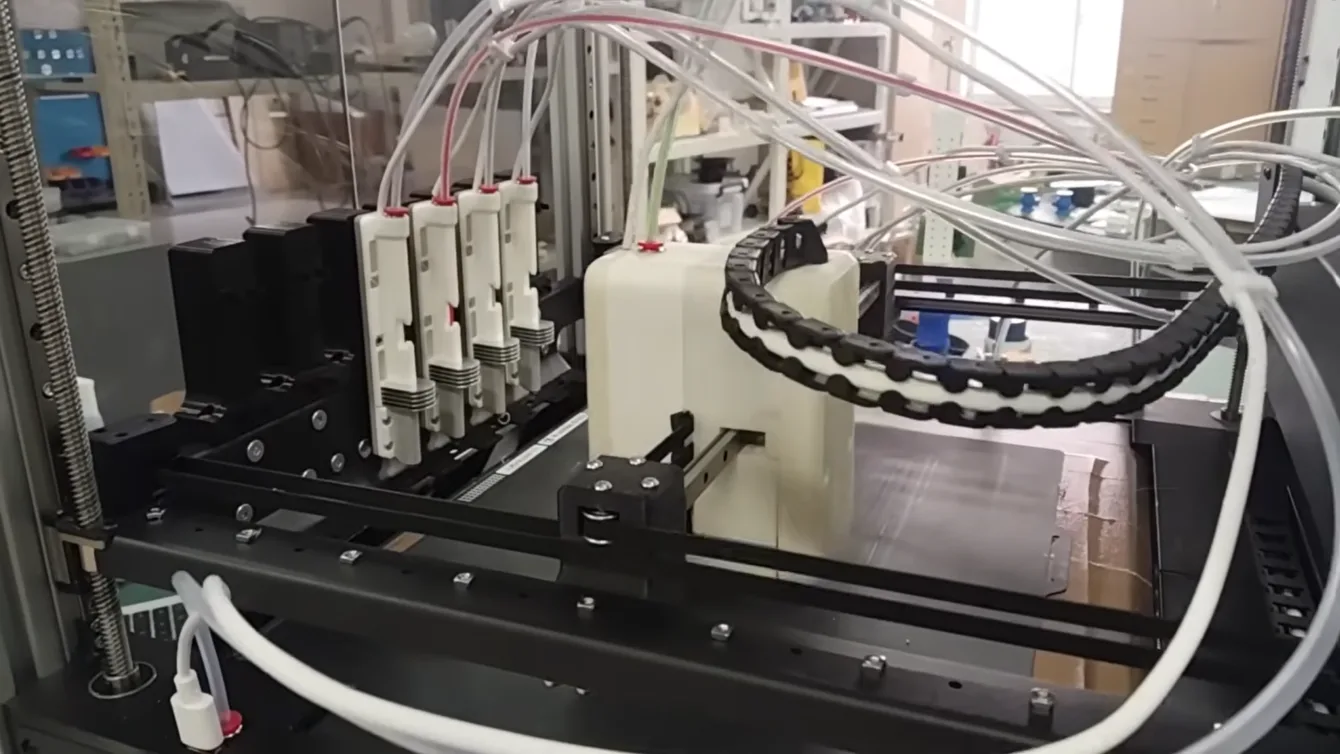
Parked heads sit at standby temperature and heat to working temperature before being picked up. No waiting for a cold hotend to reach target – it’s already hot. Each dock also has a microswitch so the printer knows a head is actually parked.
The docks can clean the nozzle too. Besides the seat they contain a wiper, air cooling, and a fan.
2000 tool changes in a row
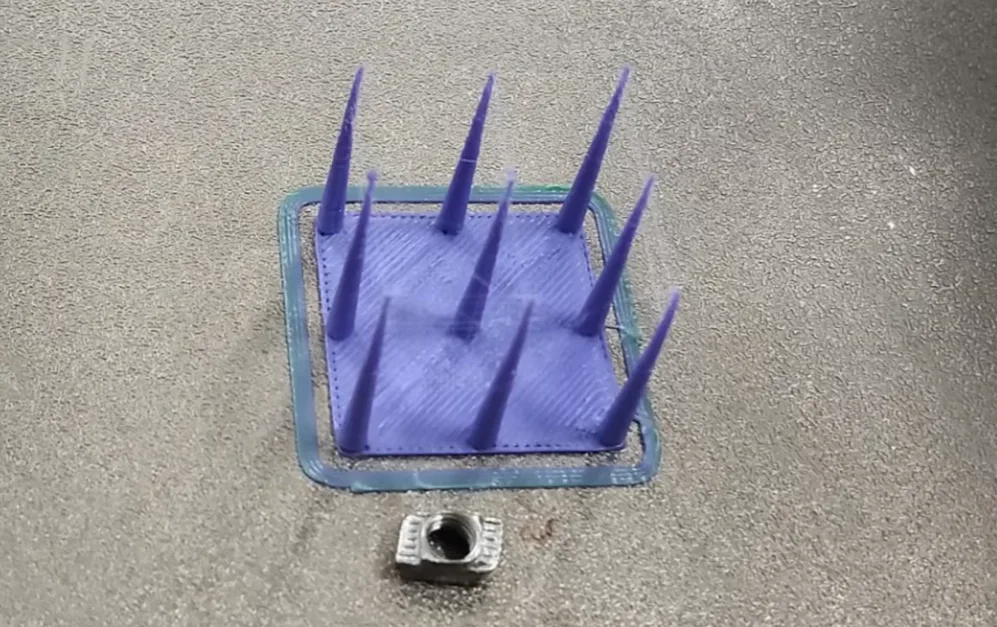
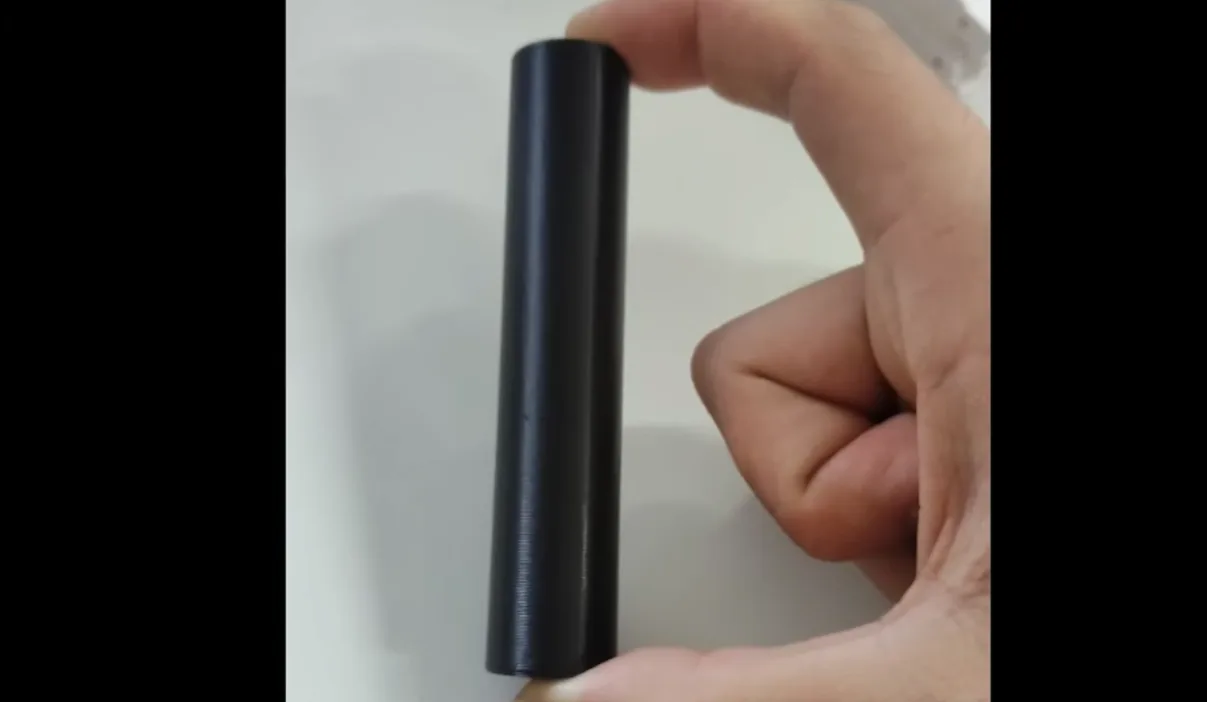
The author actually tested the thing – 2000 consecutive tool changes, stringing tests, and a printed cylinder. All came out fine, and the video shows it.
For comparison, Snapmaker U1 swaps tools in about 5 seconds; community tests put Bambu Vortek at 15–30 seconds per cycle. YUDX’s claimed one-second swap is therefore pretty ambitious. A separate article has a detailed comparison of commercial toolchangers.
Who this is for
Definitely not a beginner project. YUDX assumes you already have a working Voron 2.4, can set up RepRapFirmware, and don’t mind sourcing custom parts. The BOM includes CNC-machined components, custom gears, and a handful of other bits. Then there’s the manual job of gluing 32 magnets and 32 balls.
The author notes in the BOM that a ready-made extruder kit may appear in the coming months. That would cut the build effort quite a bit.
Even if the project had stayed on a university student’s desk, it shows what one person can design and get running. Turning it into volume production is a completely different game, but that’s not really the point here.
Source: github.com/dumplinglab/YUDX-tool-changer