Why even check the FCC?
Any device that transmits Wi-Fi in the US has to clear FCC certification. The maker must file exactly what it broadcasts and on which frequencies, and part of that paperwork is public. For printers that means you often spot a new model weeks before the company says anything.
Bambu Lab shows up under Shenzhen Tuozhu Technology with grantee code 2A6J8. On 11 September two fresh entries appeared together: H3C (PF008-P) and X2D Pro (PF004-E).
H3C has at least some public exhibits. They list Wi-Fi on 2.4 and 5 GHz using 802.11a/b/g/n/ac/ax, limited to 20/40 MHz channels—no 6E or 7. The PSU is 24 V / 10.4 A, roughly 250 W, sourced from three suppliers. The test sample landed in the lab on 24 July. X2D Pro only shows 2.4 GHz approval and zero public attachments, so we have the name and the date, nothing else.
From FCC filing to sales—days at Bambu Lab
How long until the new printer actually ships? Look at past Bambu filings and release dates and the gap is measured in days.
| Model | Certification | Sales start | Gap |
|---|---|---|---|
| H2C | 18 Nov 2025 | 18 Nov 2025 | same day |
| A2L | 28 May 2026 | 1 Jun 2026 | 4 days |
| H3C, X2D Pro | 11 Sep 2026 | not announced yet | ? |
Hardware samples arrive much earlier—the H3C unit reached the lab at the end of July. Bambu simply times the public certificate to drop right before the launch push.
If the pattern holds, we should see H3C and X2D Pro announced in days or weeks.
What the patents hint about H3C
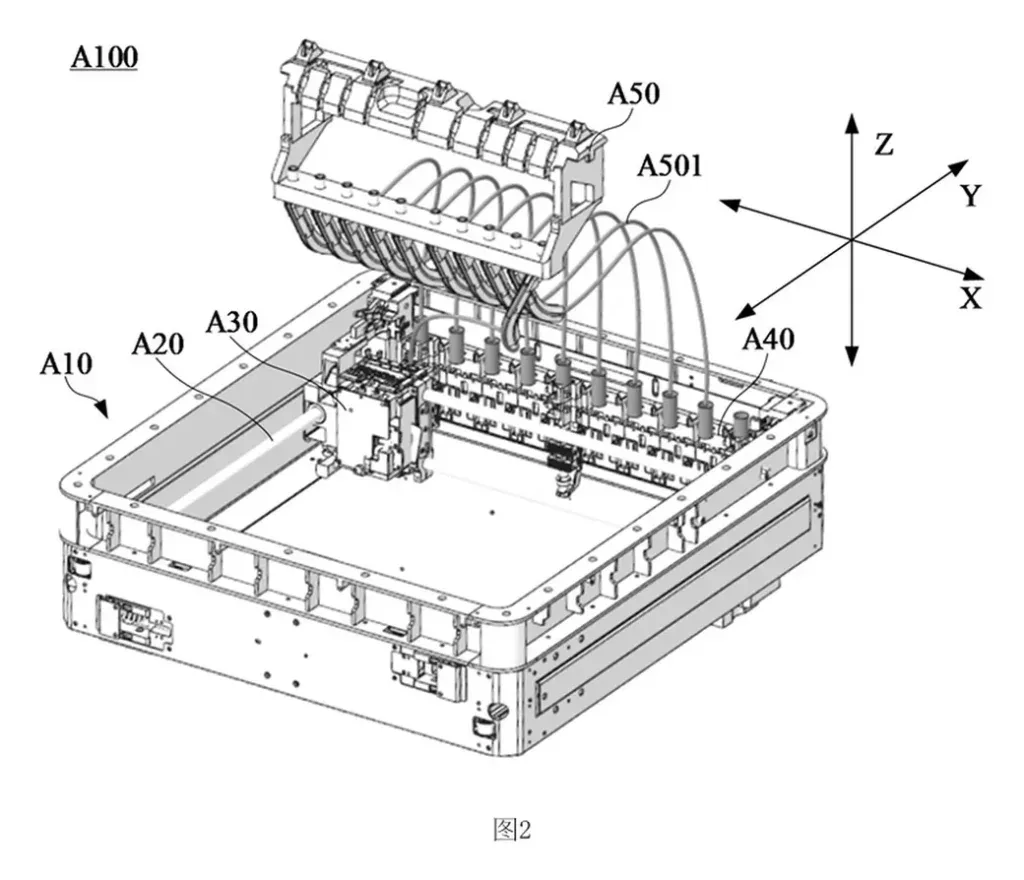
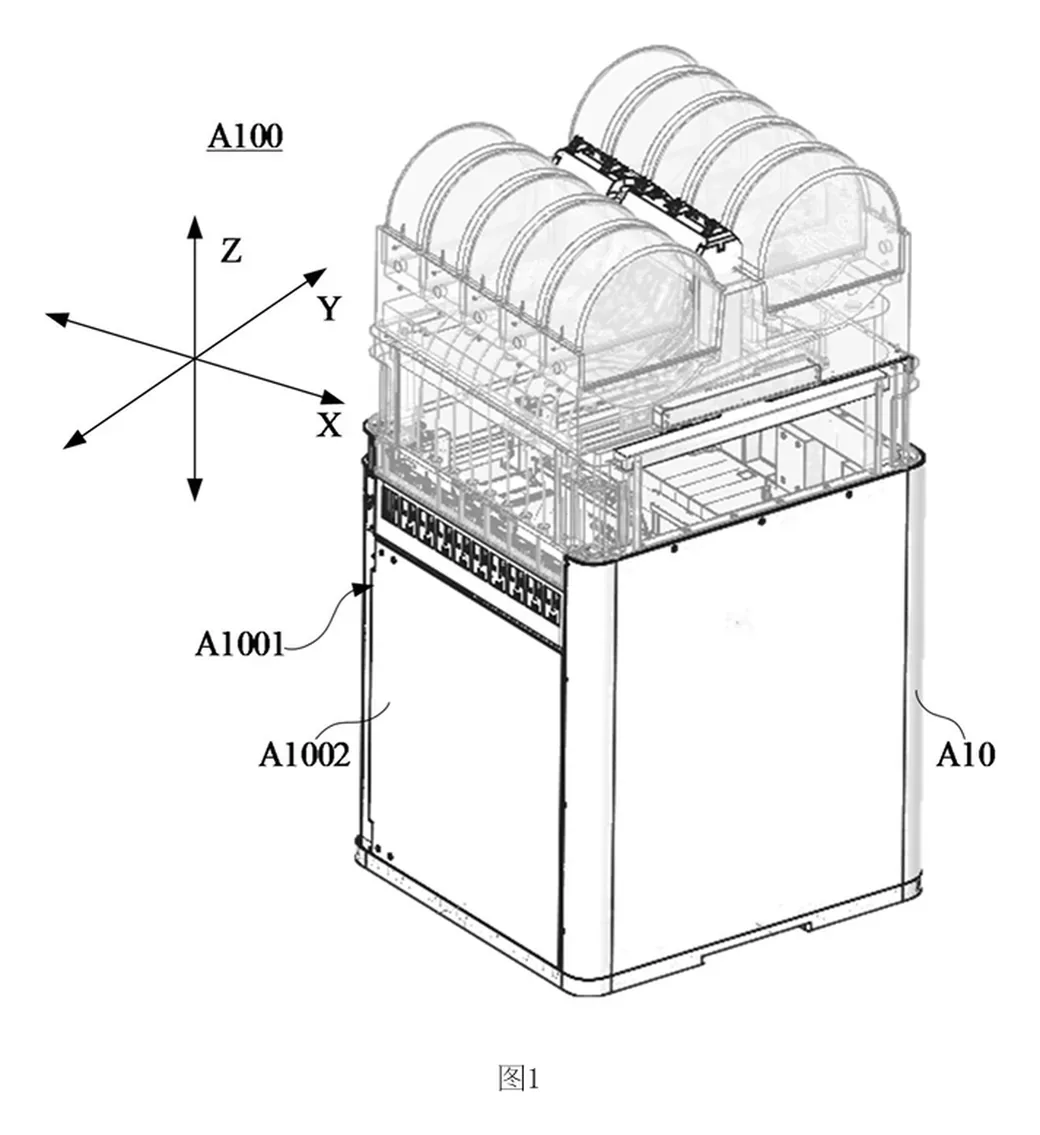
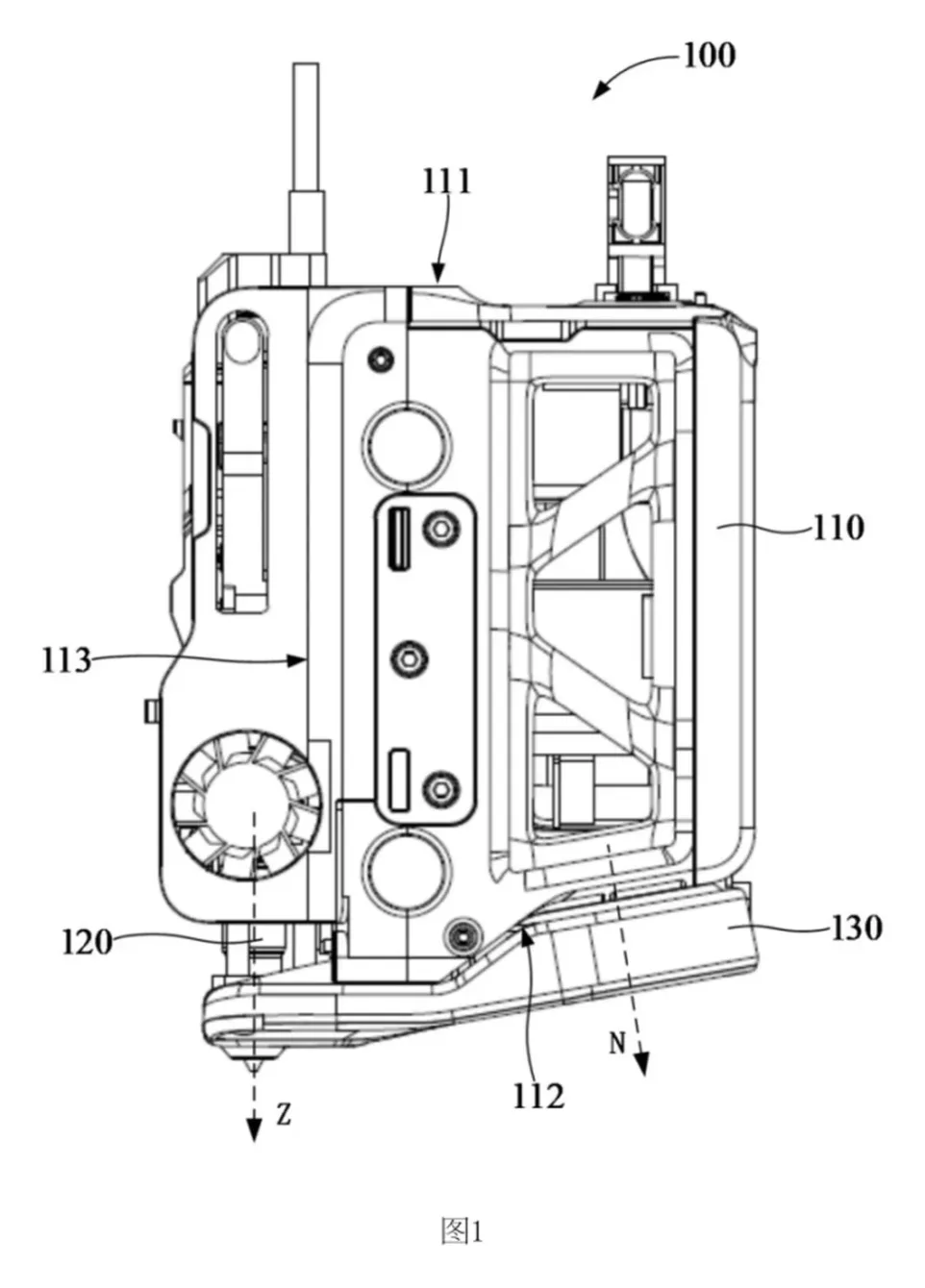
CNIPA published three Bambu applications on 14 August 2026. Two (CN 122560412 A, CN 122560413 A) cover a print-head parking tray; the third (CN 122560409 A) describes the head itself.
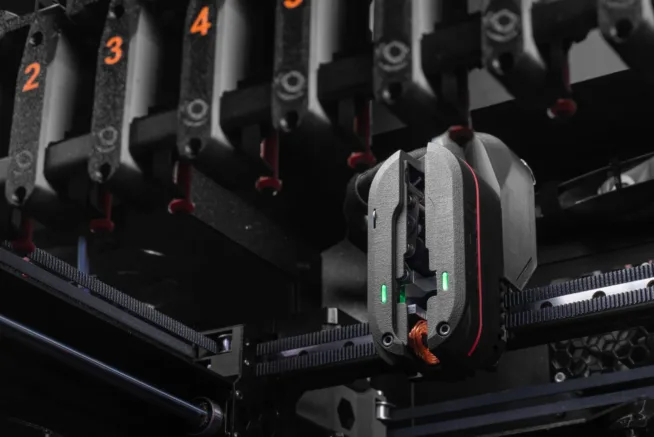
The drawings show a machine with ten filament spools. Nine swappable heads live in the tray; the tenth sits on the toolhead. Today’s H2C Vortek system carries six swappable hotends plus one fixed retractable nozzle—seven nozzles total. Capacity would rise by roughly half.
The timeline is telling. The priority filing for the tray dates to 6 November 2025, twelve days before H2C launched. The June 2026 version adds the nine positions and single-motion swap. Bambu also asked for early publication, so the patents appeared in six weeks instead of the usual eighteen months.
H3C itself is never named. Patents describe mechanisms, not products, so the link to the FCC filing is just timing.
X2D Pro and the R1 laser
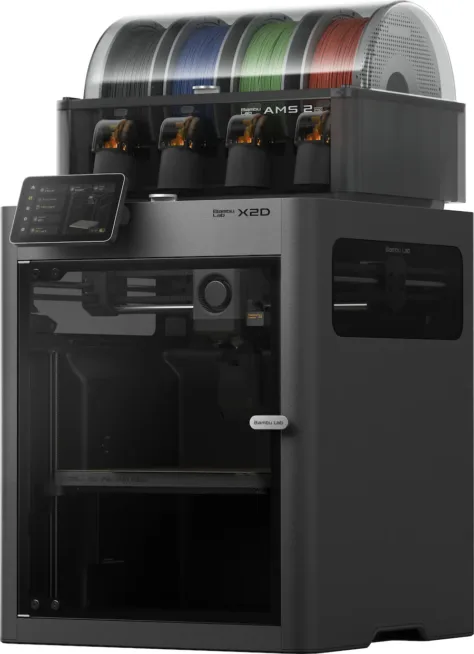
X2D landed in April as the X1 Carbon successor. Two nozzles, 65 °C chamber, 256 × 256 × 260 mm volume, starts at $649. “Pro” at Bambu usually means upgraded internals in the same chassis—see H2D versus H2D Pro. Higher nozzle temp, better filtration or extra sensors would fit the pattern, but the FCC filing reveals none of that.
On 13 August the company also teased R1, its first laser engraver/cutter, due September 2026. No matching certification has appeared under 2A6J8 yet, which sits a little awkwardly with the earlier pattern. Either the filing drops in the next few days, it’s under a different entity, or the date moved.
What the FCC won’t tell you
Block diagrams, schematics and functional descriptions stay permanently redacted. Internal and external photos, the manual and test-lab shots are sealed for 180 days and will be released 10 March 2027.
Nothing about kinematics, build volume or appearance leaks from the filing. It only covers the radio, not the printer.
What’s confirmed and what isn’t
Confirmed: the names H3C and X2D Pro, the certification date, Wi-Fi and PSU details for H3C, the patent contents and the R1 teaser.
Inferred: H3C opens an H3 series, the published patents apply to it, and launch is imminent.
Still unknown: price, build volume, speed, and whether the patented mechanism will actually ship in that form. Any “H3C specs” you see online are guesses.