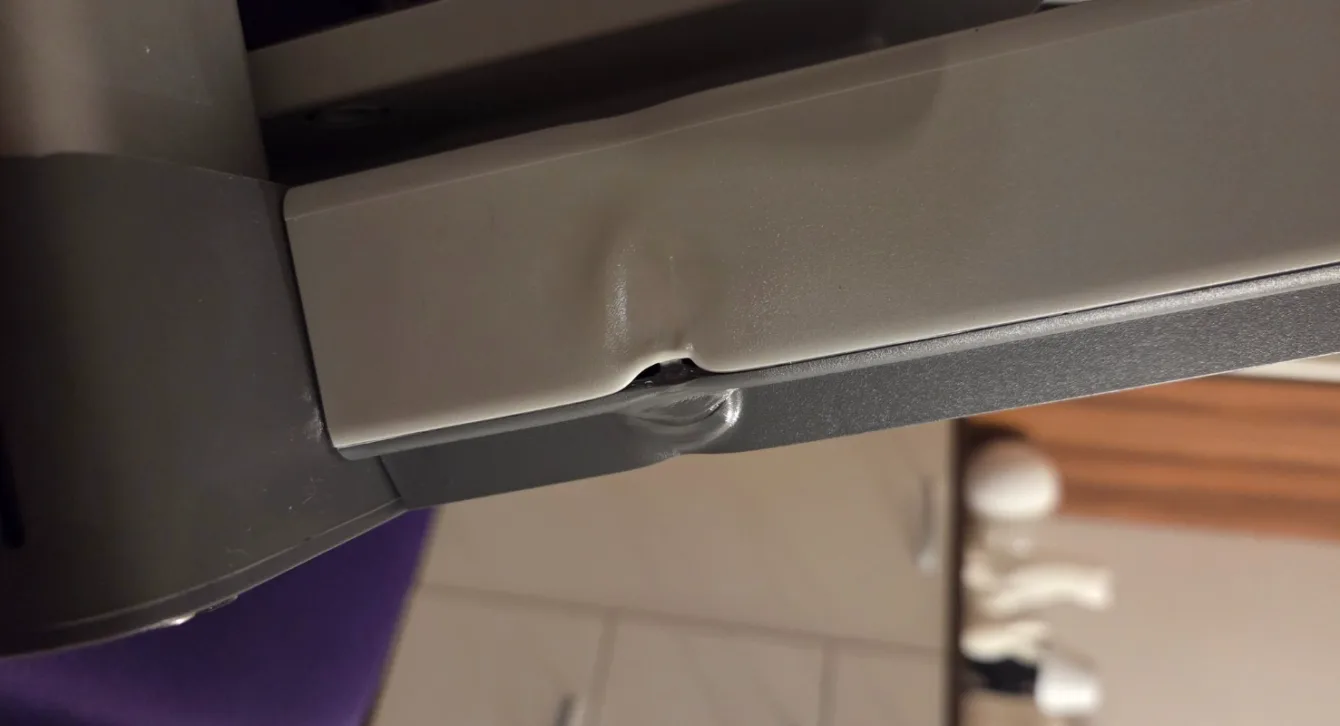
Bambu Lab 3D printers are extremely popular both in the Czech Republic and worldwide, especially due to their very low price. Following the issues that 3D printers faced in previous years, there is now another one. Under certain conditions in the network, the protective component can overheat, damaging the plastics of the 3D printer.
The problem is located on the AC board, where there is 230V. This issue concerns the Bambu Lab A1.
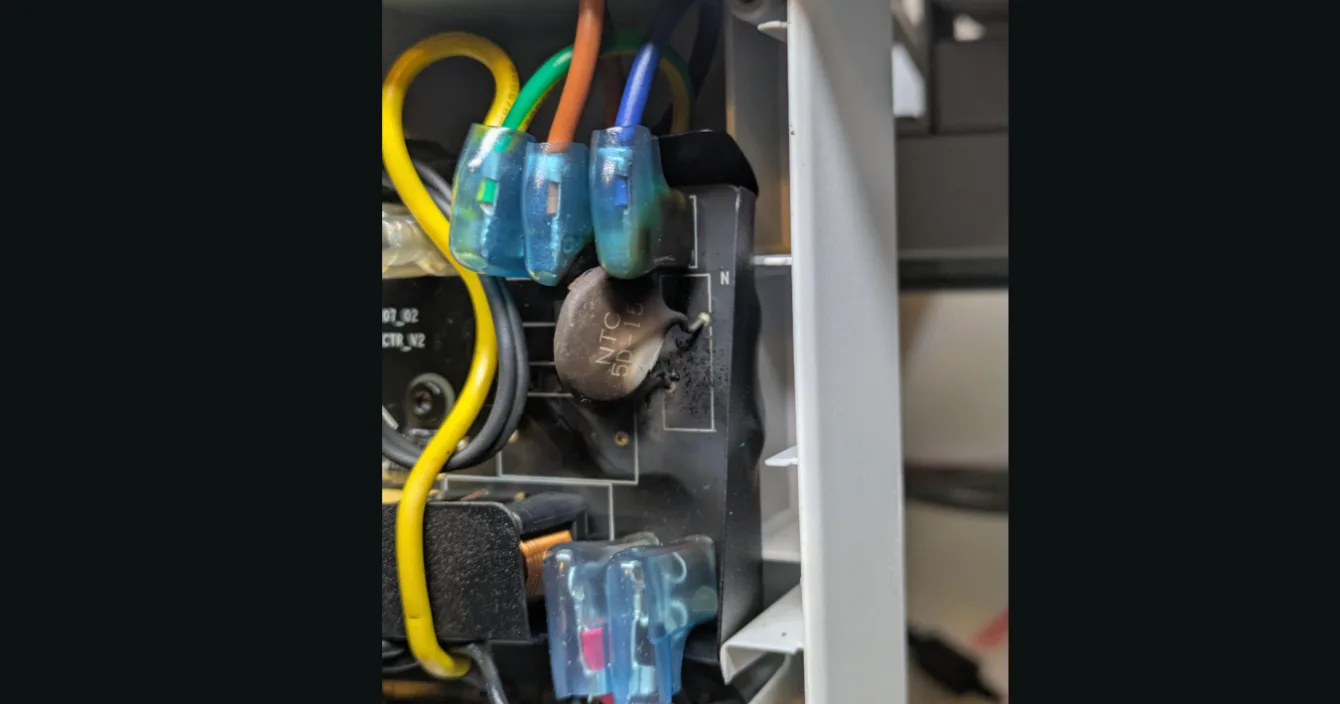
The component in question is the inrush limiter. This is a protective component that decreases its resistance as the temperature increases – but it is not a temperature sensor.
The inrush limiter limits the inrush current when the 3D printer is turned on.
According to discussions online, this component could reach temperatures over 140 °C, which is quite a lot. Too much, in fact.
This overheating of the component causes the melting of the 3D printer’s plastics, and with prolonged and excessive stress on this component, it can become damaged. This manifests itself as the printer being unable to turn on.
This is not the first major issue with Bambu Lab printers. We have already encountered automatic print starts due to a cloud error. Another significant problem was with the power cable to the heated bed, which is powered by 230V. It wore out due to mechanical stress, damaging the insulation of the wires and leading to a short circuit and sparking.
The problem is not random, nor is it new (first mentions appeared at the end of last year), and Bambu Lab has already responded to it and has (?) a solution.
They created a new version of this board. They removed this component (and several others) from it, and the question is whether this is the best choice to solve the problem.
They turned a simple board into an even simpler one, raising the question of whether this modified board can still meet certification standards.
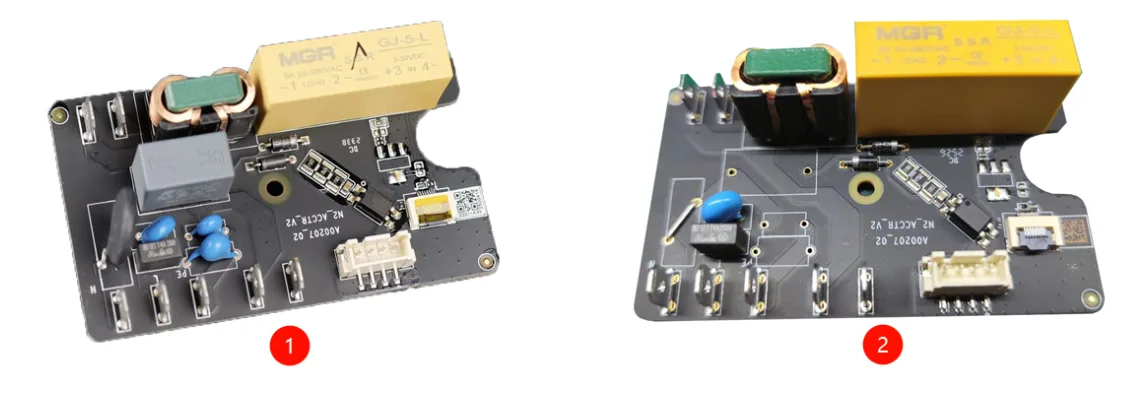
Very strange solution.
You are supposed to replace the board that carries 230V mains voltage yourself. Laypeople without knowledge. Of course, you must not replace it while the printer is plugged into the outlet.
It is shocking that the company expects its users to replace the printer’s board, which carries 230V mains voltage during operation.
If something happens, the consequences are, of course, on you – for example, a poorly inserted wire.
You can find a description of how to do it here https://wiki.bambulab.com/en/a1/maintenance/ac-board-replacement
If this problem occurs for you, the recommendation is to create a ticket on the Bambu Lab website, and they will send you a new revision of the board.
The same problem is faced by users in the Czech Republic https://www.facebook.com/groups/bambulabczsk/permalink/1623606298810565/